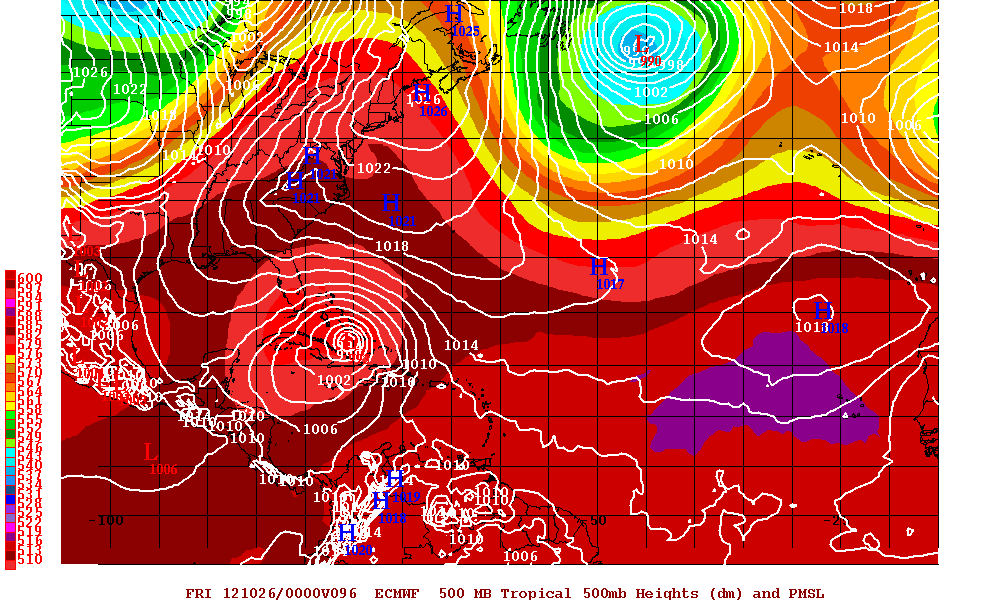
Hurricane Sandy Information

This post will be divided into four sections, so you can scroll down to what you’d like to read about.

-Sandy: Current and short term forecast

-Model madness: Trying to pin down the track of Sandy into the Northeast US

-Meteorological Insanity: Trying to figure out how strong Sandy will be as it hits the Northeast US

-Be Prepared: Preliminary Impact Graphics

Sandy: Current and short term forecast:
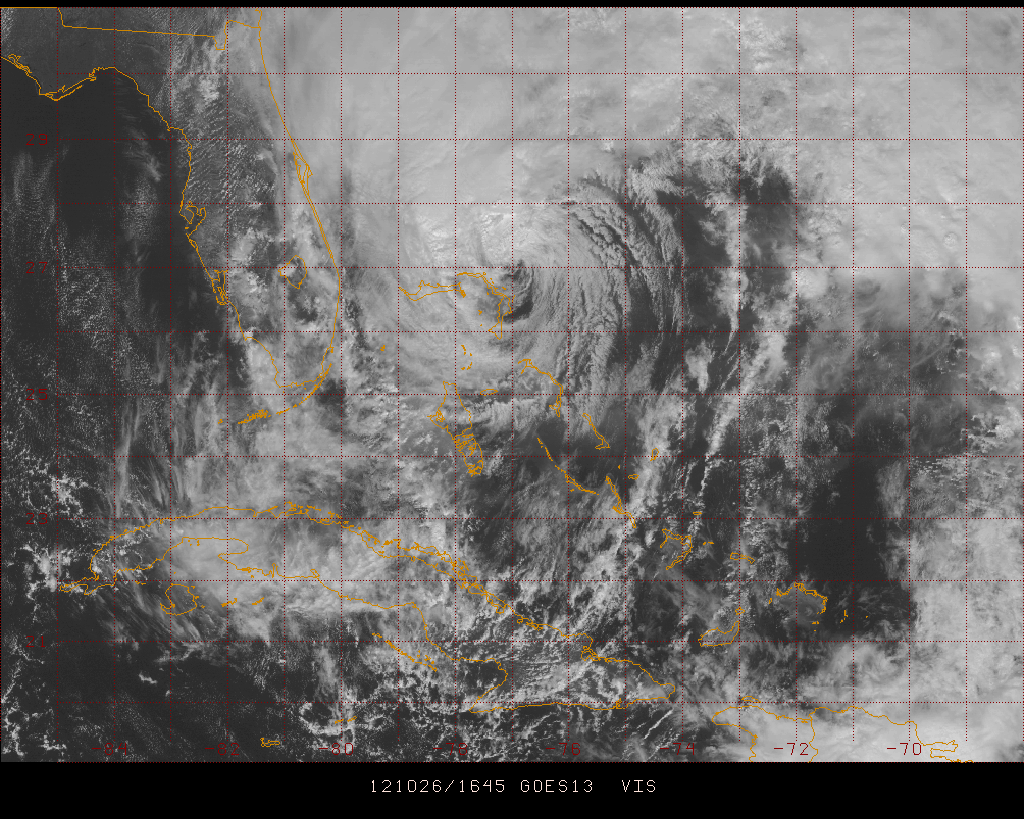
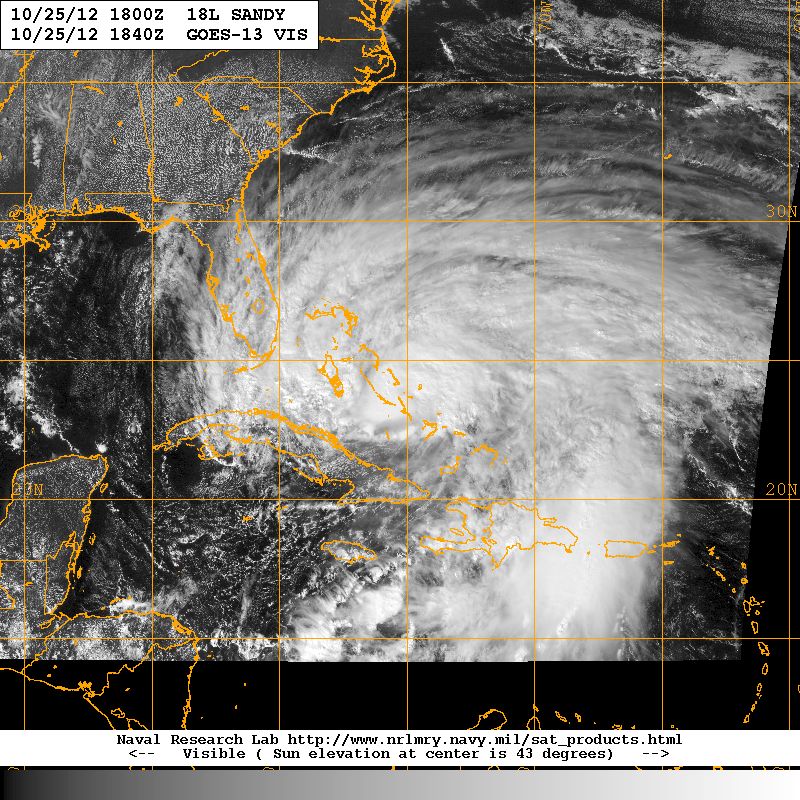
Above is a current look at hurricane Sandy, as of 12:45pm EDT on this Friday. As has been expected, shear and dry air associated with an upper level trough of low pressure have caused Sandy to expand and begin taking on sub-tropical characteristics. Sandy is still a powerful cyclone with sustained winds of 80MPH over the northern Bahamas and a minimum central pressure of 970mb as it slowly moves north.
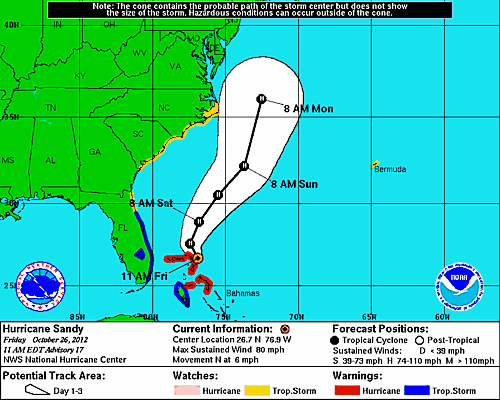
As Sandy pulls north of the Bahamas it is expected to maintain minimal hurricane intensity due to a large area of upper level divergence near the cyclone. The wind field of Sandy, as can be seen on the satellite image above, is expanding, and will continue to slowly expand as Sandy becomes more and more non-tropical on its way up the east coast. Due to the large nature of the wind field, even though Sandy is expected to track well off-shore of the Carolinas, tropical storm force winds will be possible, especially in areas close to the coastline.
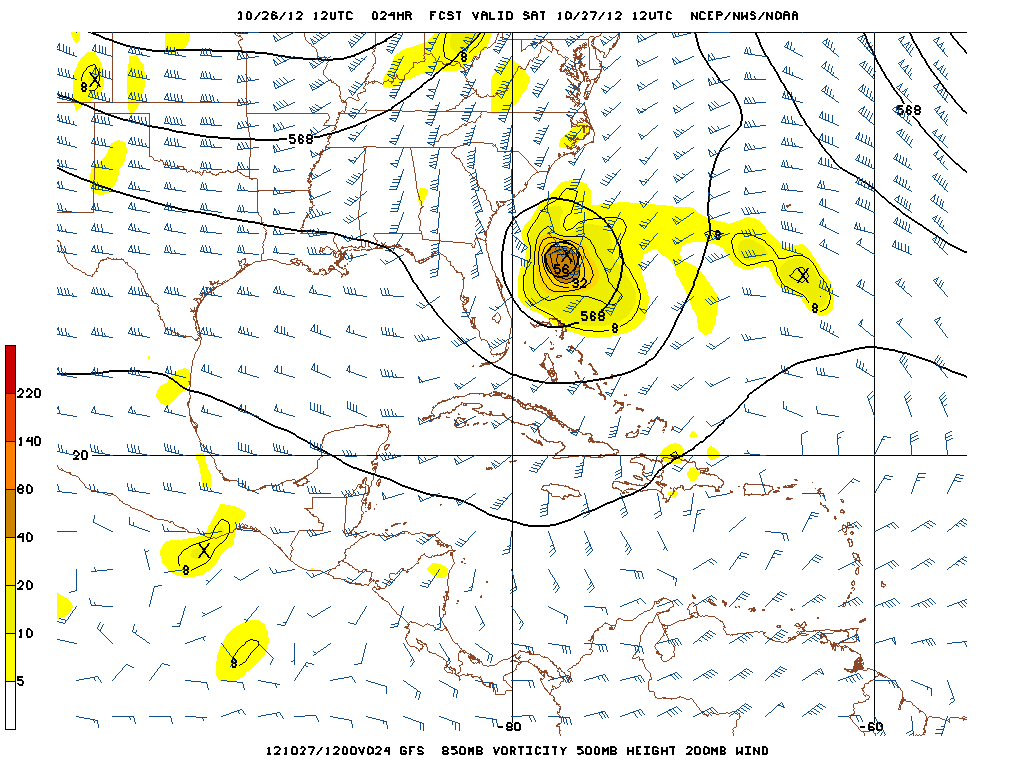
When looking at the GFS model forecast for Saturday morning, what stands out is although strong upper level winds will continue to pierce through the center of Sandy off the southeast US coast, the very strong upper level winds appear to be “fanning out” north of the hurricane. This will allow for significant lift to occur with Sandy through the weekend and allow the storm to maintain a low pressure and category 1 hurricane intensity this weekend, even if the system doesn’t look like a classic hurricane anymore.

Model madness: Trying to pin down the track of Sandy into the Northeast US
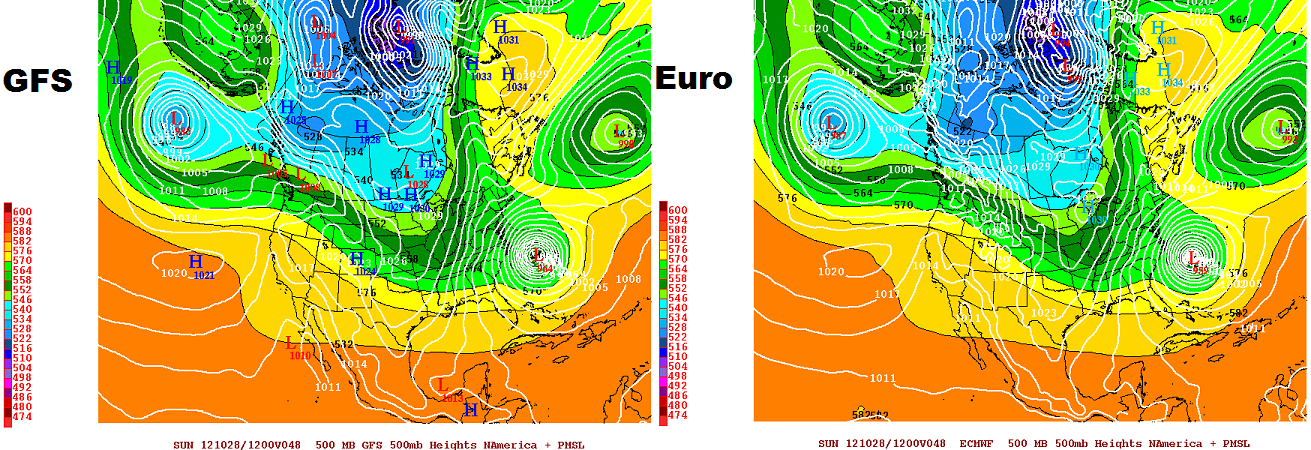
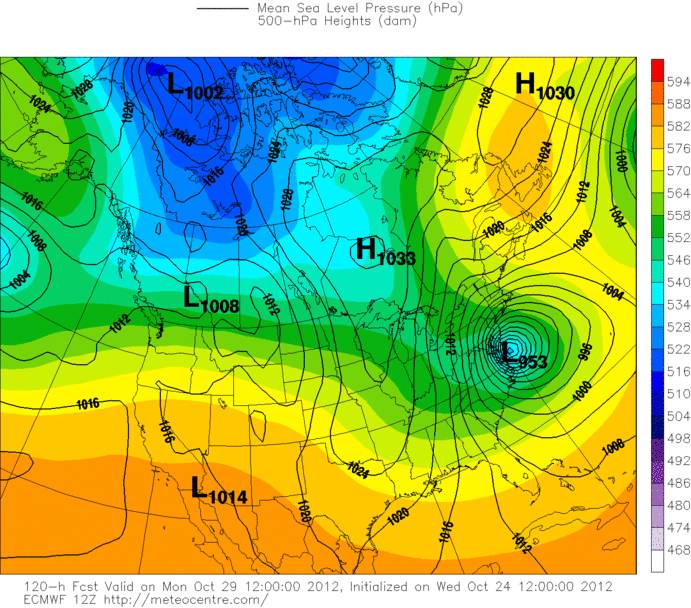
Above is a look at this afternoon’s GFS (American) and European model runs. This afternoon’s GFS took Sandy farther north; towards the Long Island area this run of the model while the European model took Sandy farther north than it has, however is still farther south than the GFS into NJ. When looking at the two models above valid Sunday morning, the differences are very subtle:

  1. The two models are in remarkable agreement in the Pacific and western N. America pattern.
  2. The two models are almost identical in the north Atlantic, with one exception: The GFS is still a little bit weaker with the strip of ridging between Sandy and the ocean low to the east. This allows Sandy to swing a little bit farther east on the GFS before phasing with the incoming trough, resulting in a landfall a bit farther north than the Euro.

Other than small disagreements in how far east Sandy can swing out before being captured by the incoming trough, the two models both appear to handle the phase of Sandy and the incoming trough well…with both models showing a little bit of Fujiwhara interaction between the two features before Sandy accepts its fate in merges with the trough.

In general, the GFS and last night’s European ensembles agree on this type of scenario…with the GFS ensembles clustering on a NJ to Long Island landfall and last night’s European ensembles keying on a southern NJ landfall.

Given this general agreement, I still expect Sandy to landfall in NJ Monday night or Tuesday morning, with some risk of a landfall farther north or south:

Risks to this landfall forecast:

  1. If the incoming trough ends up stronger or weaker than expected, phasing may occur sooner or later than currently expected. This would result in an adjustment in this track forecast.
  2. If the Atlantic ridging is weaker or stronger than expected, Sandy may swing more or less out to the east before hooking back towards the NW, resulting in a landfall farther north or south.

Meteorological Insanity: Trying to figure out how strong Sandy will be as it hits the Northeast US
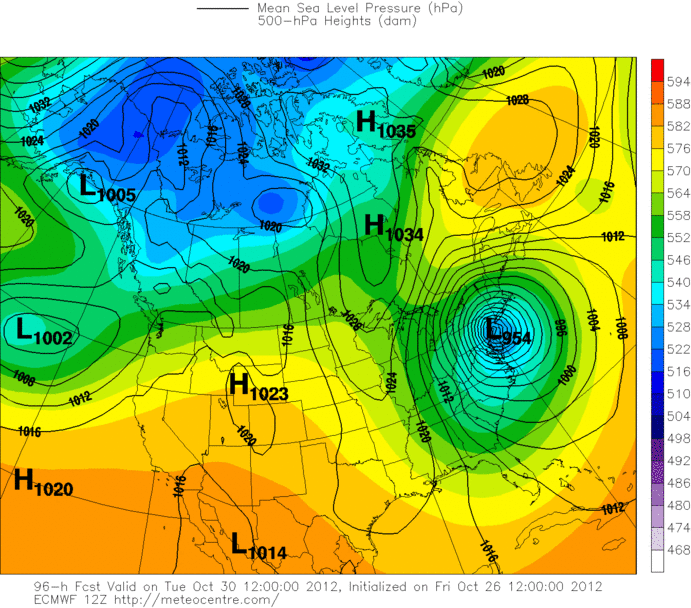
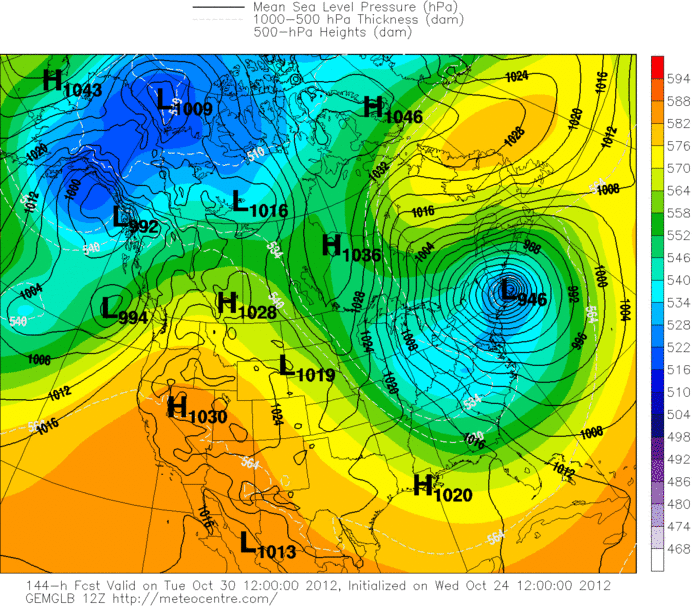
Above is a look at meteorological insanity—a hybrid, very strong low pressure system pegged under a very deep upper level low hitting the east coast of the US—as projected by the European model. The media has tossed around terms like “Frankenstorm” and “Perfect Storm II” to describe this storm as it moves ashore. Will it be all that it’s hyped to be as it moves in?
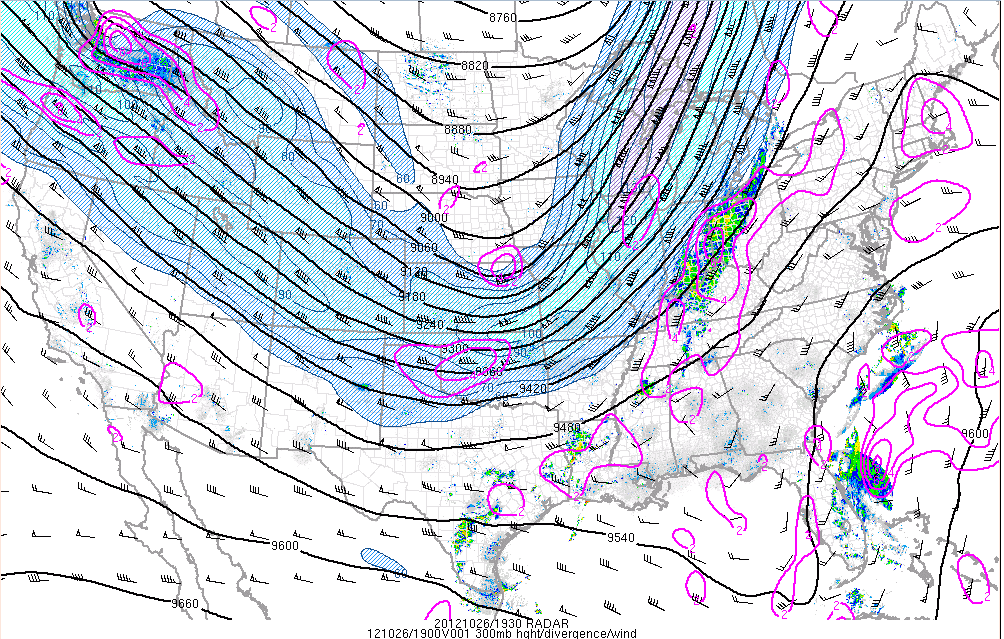
To answer that question, let’s look at the forces that will help strengthen or weaken Sandy into early next week. A look at the current upper level plot shows that strong upper level winds are causing considerable shear over Sandy, which is located just north of the western Bahamas at the time of this image. However, one can see that as mentioned earlier, the upper level winds north of the center are fanning out, which is creating upper level divergence or lift, shown by the purple. This will help Sandy maintain its deep central pressure—currently at 970mb—and aid in convective development, when combined with the warm waters of the Gulf Stream:
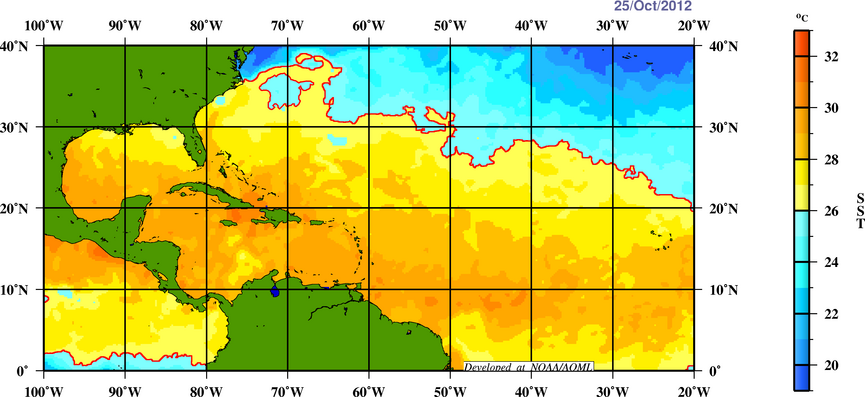
These two factors support Sandy remaining a deep cyclone through the weekend as it tracks off the southeast US coast. The strong upper level winds however will continue to shear Sandy, meaning it will remain a sub-tropical cyclone, and also meaning any intensification over the weekend will be minimal. Essentially, I am expecting Sandy to maintain category 1 hurricane intensity with a pressure around 970mb through the weekend.
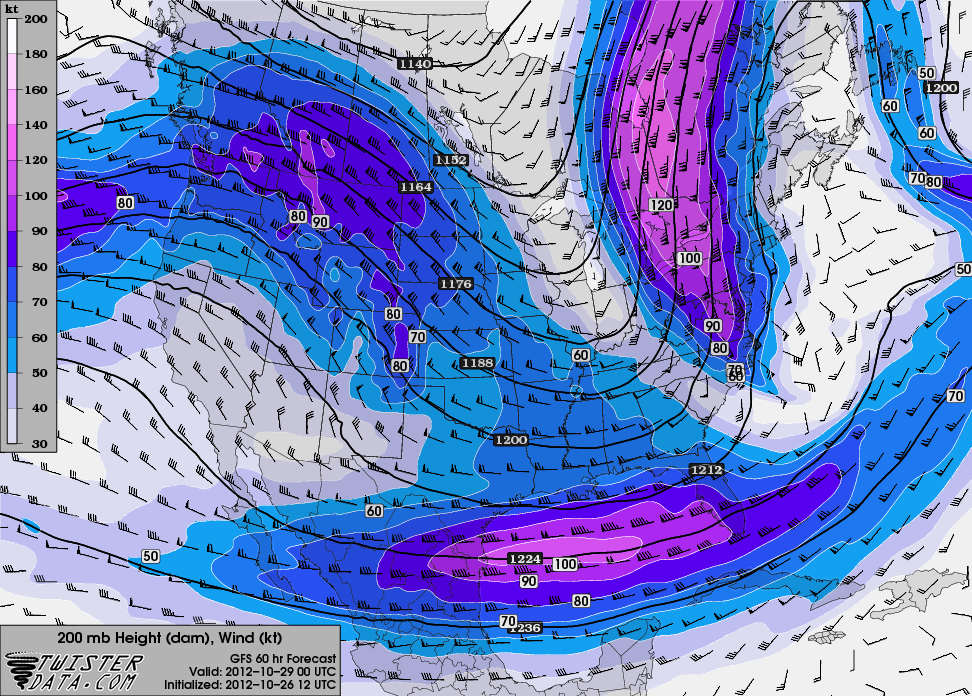
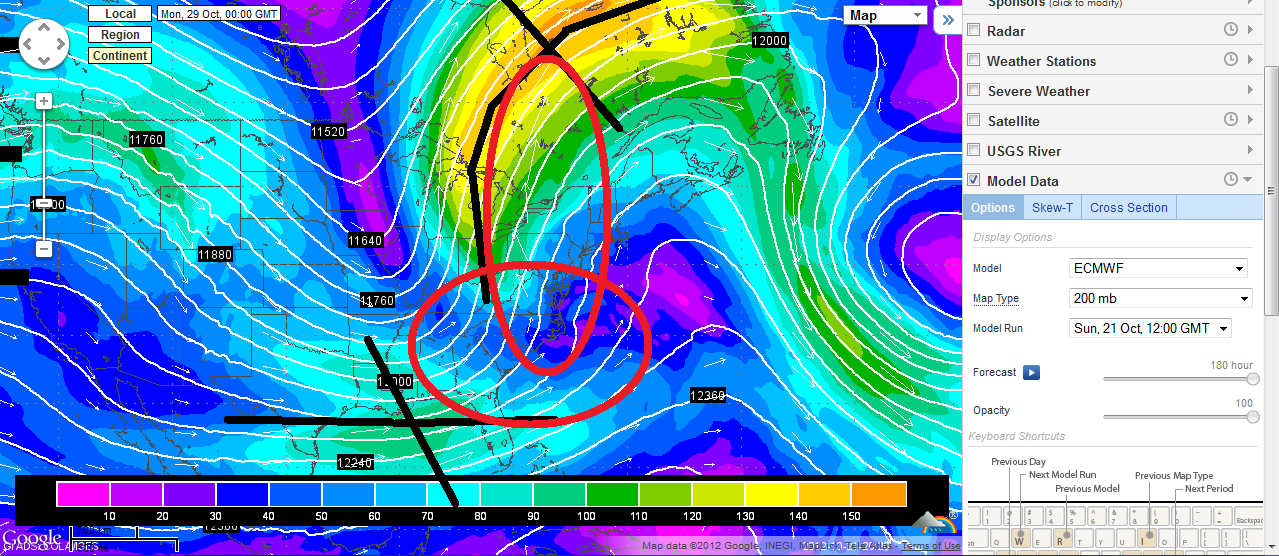
As the trough currently over the upper Midwest continues to amplify, an extremely impressive jet structure will set up over the eastern US and western Atlantic. The above image off the GFS model, valid for Sunday evening, shows three jet streaks providing for mass evacuation of air over Sandy (due east of North Carolina at this point). This will provide for tremendous lift and should allow for Sandy to begin deepening more at this point.

Once Sandy phases with the upper level trough on Monday, significant mid-level height falls will ensure over the storm. Note how on this image, from the GFS valid early Tuesday morning, the mid-level heights, represented by the black lines, are much lower along the Mid Atlantic coastline than over surrounding areas. This occurs when the lower heights with the trough combine with the lower heights of Sandy, resulting in a very deep mid-upper level low pressure system over Sandy. This, combined with significant mid to upper level spin in the atmosphere, indicated by the color-fill, will result in tremendous low to mid-level lift with Sandy, which will aid in the system further lowering its minimum central pressure Monday as it nears the northeastern US.
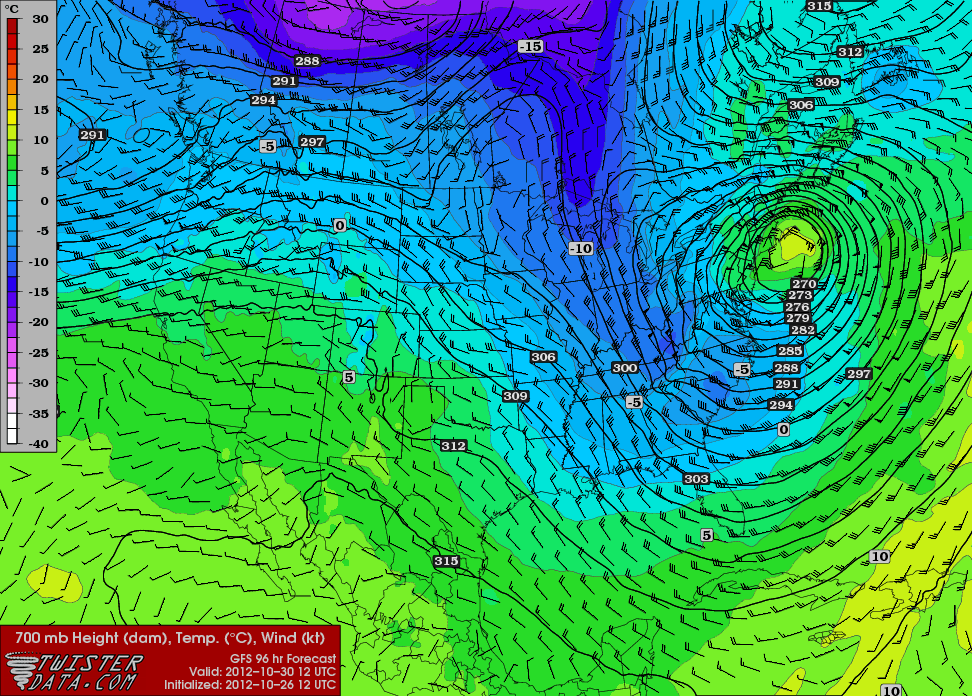
In addition, once the warm, remaining tropical core of Sandy gets caught under the cold core trough aloft, it will aid in providing for lift over Sandy due to the buoyant nature of warm air.

These factors will allow for Sandy to strengthen 10-20mb (I’m talking central pressure here) once the phase occurs on Monday. Seeing as though I expect Sandy to maintain a pressure of 965 to 970mb until the phase, I still like yesterday’s forecast of a 945-960mb low pressure system hitting somewhere in the Northeast Monday night or Tuesday. Wind wise, this would correlate to a large area of 70-80MPH winds over water, or a category 1 hurricane. These are sustained values, gusts will be higher.

Be Prepared: Preliminary Impact Graphics

Storm surge:

Due to the large wind field that will be associated with Sandy as it approaches the Northeast, a large amount of water will be moved around. As Sandy moves off the Southeast US coastline an easterly flow will allow some water to pile up even south of the expected landfall point. Here, rises will be more negligible. Near and north of the landfall point, which at this point appears to be NJ or thereabout, an extended period of strong onshore winds over a large area will push a lot of water towards the shoreline. It is too early to put specific numbers on the surge threat, however, in the red area, should Sandy remain on the forecast track, storm surge values would be several feet or more, meaning areas on the coastal plain would see several feet of storm surge flooding. This water will be able to pile up for several tide cycles, with the onshore flow increasing Sunday night and not decreasing until Sandy makes landfall on Tuesday. This will coincide with higher than normal lunar tides to maximize the potential storm surge flood threat. Please heed any evacuation orders that may be issued along the Northeast US coastline.

Winds:

Given the large and intense wind field of Sandy, literally the whole Northeast US and adjacent southern Ontario and Quebec will see the potential for damaging wind gusts. As Sandy nears the shoreline, model guidance is indicating a belt of 100+MPH winds about 5,000 feet above the ground to the north of the center of circulation. Due to the stable nature of the airmass, this won’t mix to the ground as efficiently as in normal hurricanes, however to the north of Sandy’s landfall point, hurricane force wind gusts may occur well inland. The biggest risk for hurricane force wind gusts occurring well away from the ocean will be over Southern New England and New Jersey. Areas near the landfall point of Sandy will without a doubt see hurricane force wind gusts along the shoreline.

Farther inland, the pressure gradient will be very tight, and the winds about 5,000 feet above the ground will blow at over 80MPH over a large area. Here, wind gusts to 60+MPH appear likely. Locally stronger winds may occur over the higher elevations of PA and VA and downwind of these higher elevations, assuming the low tracks to the northeast after a NJ landfall.

The pressure gradient will be strong back to the Great Lakes, where tropical storm force wind gusts will be possible.

In general, in the green area, where wind gusts will be “low end tropical storm force,” isolated to scattered power outages may occur. In the yellow area, where wind gusts will be “high end tropical storm force,” more widespread tree and power line damage will likely occur. In the red, where I think hurricane force wind gusts are most likely, power is expected to go out, and some structural damage may occur.

Should the expected strength/track of Sandy change, I will update this wind gust map.

Snowfall:
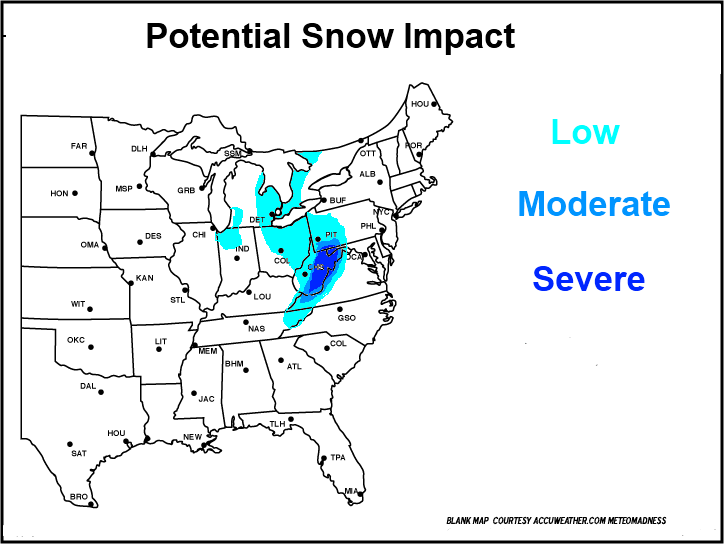
Due to the cold air that will wrap in to the west of Sandy, very heavy mountain snow is expected as the tropical moisture is thrown back into the cold air. The heaviest snow should occur over the central Appellations from southwestern PA south through WV and far western VA. Here, several feet of wet snow may fall.

Elsewhere, there may just be enough cold air over the eastern Great Lakes and upper Ohio Valley for some snow as Sandy pushes inland. However, this scenario is much more uncertain, so for now will paint in a “low impact” snow event where snow is most likely in these areas.

Rainfall:
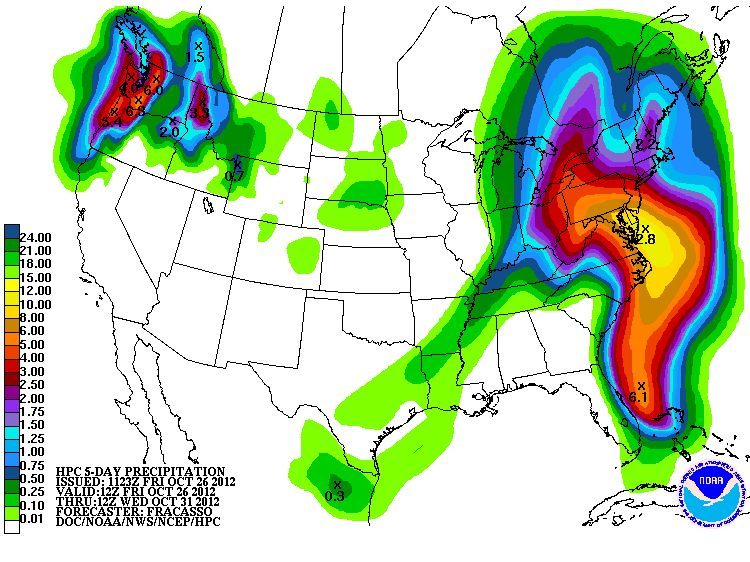
As Sandy moves northwestward, it will bring a large slug of tropical moisture. A large swath of 3-6”+ rainfall amounts will occur, and flooding will be possible. Look at the above map to see what the Government’s Hydrometeorlogical Prediction Center expects for rainfall in your area.

I will have another update as details become clearer Saturday Night or Sunday Morning.
Posted in Pattern Discussion, Storm Forecasts | Leave a comment

Time to Start Zeroing in on Hurricane Sandy’s Northeast US Landfall

After ravaging eastern Cuba as a strong category 2 hurricane last night, hurricane Sandy is zigzagging her way through the central Bahamas with sustained winds of greater than 100MPH. Rain bands from Sandy are also brushing up against the southeastern coast of Florida as the hurricane passes by to the east. Although Sandy is still purely tropical with a tight core of intense winds over the central Bahamas, the hurricane is beginning to interact with an upper level trough which is why the hurricane has such a large mass of clouds associated with it.

Through the weekend, Sandy is expected to pass close to or over the western Bahamas, which remain under a hurricane warning. The hurricane will then turn towards the north-northeast off the southeast US coast, with large, battering waves and a high risk of rip currents occurring through the weekend from southern Florida north through the Carolinas.

As Sandy snakes its way off the southeast coast this weekend, it is still expected to merge with a mid to upper level trough (shown above), causing the cyclone to begin taking on sub-tropical characteristics.  This means that while Sandy will still draw energy from the warm waters of the Gulf Stream, and still maintain strong winds near its center, the system will begin to also draw energy from non-tropical sources such as the jet stream and warm and cold fronts. While this happens, the winds from Sandy will also spread farther away from the tight core, which means that although Sandy will likely weaken to a category 1 hurricane this weekend, it will remain a large and dangerous storm.

Today, two clusters of modeling have developed with relation to Sandy’s track and eventual landfall:

  1. The Euro and NOGAPS models show Sandy staying closer to the US coastline and phase the system more aggressively with the diving central US trough, resulting in a landfall into the Delmarva region.
  2. The GFS, GGEM (Canadian) and UKMET models forecast Sandy to wander a little farther north before being captured by the incoming trough, resulting in a landfall in the NYC, Long Island or Southern New England area.

There appear to be couple of differences in the modeling that result in these two camps of possible landfall locations:

  1. The main difference seems to be the strength of ridging stretching between the ocean low over the open Atlantic and Sandy. The camp that takes Sandy farther north show slightly weaker ridging in this region. The camp that takes Sandy into the Delmarva region show stronger ridging. The GFS (left) and Euro (right) are posted above to illustrate this difference.
  2. The GFS, GGEM and UKMET all show Sandy resisting phasing a little bit initially…which can be seen on this graphic below:

This is the GFS model valid Monday morning. As can be seen, Sandy has been captured by the diving central US trough, but instead of being captured and violently phasing with the trough right away, Sandy resists this phasing. This is likely because the model is picking up on Sandy being a much stronger hurricane right now than originally thought, and maintaining a stronger warm core farther north. Strong warm core cyclones are known to initially resist phasing with a cold core trough, because the systems are not alike.

In the end however, all models do eventually show a phasing of Sandy with this northern trough, resulting in a NW motion towards the northeastern US coastline.

Which camp is ultimately correct? Right now, I’d lean towards the camp that takes Sandy into the coast a little farther north, mainly due to the possibility that Sandy will initially resist phasing a little bit, allowing it to get farther north before ultimately sling-shotting towards the northwest. The GFS and European ensembles generally agree on this type of scenario, with a likely landfall zone from NJ northward towards the Boston area, with some risk of a landfall as far south as northern Virginia, with the time-frame for landfall being Monday into Tuesday:

Now that we have established that landfall is likely, and should occur somewhere from Virginia points north Monday into Tuesday, it is time to discuss the possible strength of Sandy as it impacts the northeast US:

There are a few factors that will allow Sandy to go from a sub-tropical storm with winds near hurricane strength to a very deep hybrid storm as it nears the coastline.

Jet Structure:

Two potent jet streaks, shown above by the blue color-fill, will be positioned to provide for a huge amount of lift over the entire Mid Atlantic, Northeast, and near-shore waters as Sandy approaches.

Potential warm-seclusion nature of Sandy near landfall:

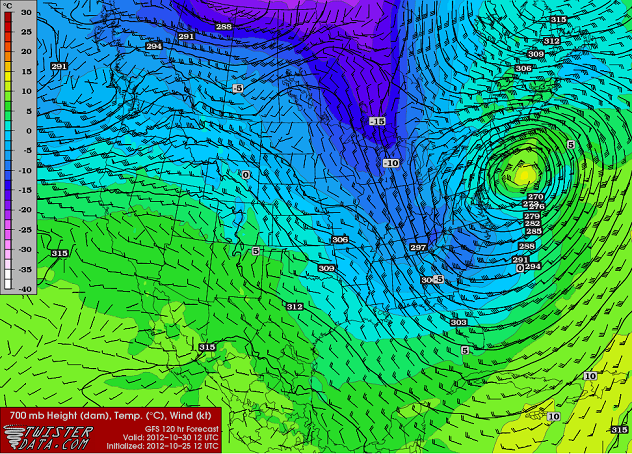
If Sandy is able to maintain a strong warm core as it heads northward into early next week, the warm core will be caught under and upper level trough and surrounded by cooler air aloft, as shown above on the GFS. This will allow for a tremendous amount of lift with Sandy due to the buoyant nature of warmer air.

Mid-level height falls, positive vorticity advection:

As Sandy is captured, the low pressure aloft associated with Sandy will combine with the lower pressure aloft created by the incoming trough, to result in pressures, or “heights” aloft to fall dramatically near and over Sandy as it approaches the US coastline. In addition, the mid-level spin, or “vorticity” within Sandy and the trough will combine and create a large amount of vorticity aloft as shown above by the color-fill. This vorticity aloft will also enhance lift.

When you combine the upper level lift caused by the jet streaks and the remaining warm core of Sandy providing for tremendous lift under a very strong low aloft, you have the ability for the storm to really strengthen as it approaches the US coastline on Monday and Tuesday. It is estimated that Sandy’s pressure will hold steady as it moves northward this weekend due to a baroclinic assist, as discussed earlier. Thus, Sandy will likely have a pressure of somewhere around 965-970mb before it begins to interact with the trough. As trough interaction occurs, Sandy will have 12-24 hours of intensification before the pro-intensification factors max out. Thus, it is reasonable to assume Sandy will strengthen 10-20mb after phasing occurs. Doing the math, this results in a potential 945-960mb low pressure system hitting the US coastline on Monday or Tuesday—and many models remain near the strong end of that if not stronger. This will result in a large and strong wind field as Sandy makes landfall.

It is too early to say who will see how much wind; however as a general idea of the wind potential Sandy will carry as it nears the US coastline:

This is the European model’s representation of winds about 5,000 feet above the ground Monday morning in knots. 1 knot equals 1.15 miles. Winds at this speed at 5,000 feet above the ground (80-90 knots) would likely translate to 60-70 knots on the surface, or about 70-80MPH over the water. These types of wind speeds are consistently showing up on our models over the water, with weaker but still dangerous winds potentially spreading well inland with Sandy.

This wind representation will change as the models continue to hone in on a final landfall destination, however there are some key takeaways from this situation:

  1. Sandy is likely to impact the Mid-Atlantic and Northeast as a category 1 hurricane Monday and Tuesday, with residual impacts lasting through Wednesday.
  2. Sandy will feature an exceptionally large area of tropical storm force winds, likely several hundred miles across, as it makes landfall.
  3. Damaging winds are likely along the coastline near and potentially hundreds of miles north of Sandy’s landfall point along the coast. Some wind damage may occur inland as well, although the strongest winds will be near the ocean.
  4. Large battering waves and significant storm surge will occur near and north of Sandy’s landfall destination.
  5. Significant rainfall will occur over much of the Mid-Atlantic and Northeast, with some rainfall reaching as far west as Ohio and Michigan.
  6. A crippling wet snow event remains possible over the Appellations from central PA south through the mountains of WV, Maryland and western VA.

As this event continues to draw closer I will have further updates with more specific impact information.

Posted in Pattern Discussion, Storm Forecasts | Leave a comment

High-Impact Storm Beginning to Look Likely for Eastern US; Jamaica, Cuba Already Battered

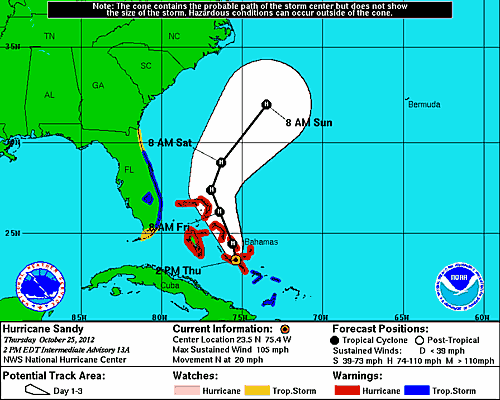
Hurricane Sandy, the storm projected to eventually impact the east coast of the US, has already hit eastern Jamaica and is now eying eastern Cuba as a hurricane. As can be seen above, the hurricane has developed a small eye with a well-organized ring of cold, intense cloud tops wrapping around this small eye. Sandy is becoming an impressive looking hurricane.

Over the next few days, Sandy will begin to have its early US impact. However, first Cuba will deal with a potent category 2 or 3 hurricane early Thursday morning. Thereafter, on Thursday and Friday, Sandy will snake its way through the central and western Bahamas, potentially as a hurricane—the Bahamian government has issued a hurricane warning for that portion of the island chain. Eastern Florida may also be grazed by Sandy, with breezy conditions and heavy rains likely to end the work-week.

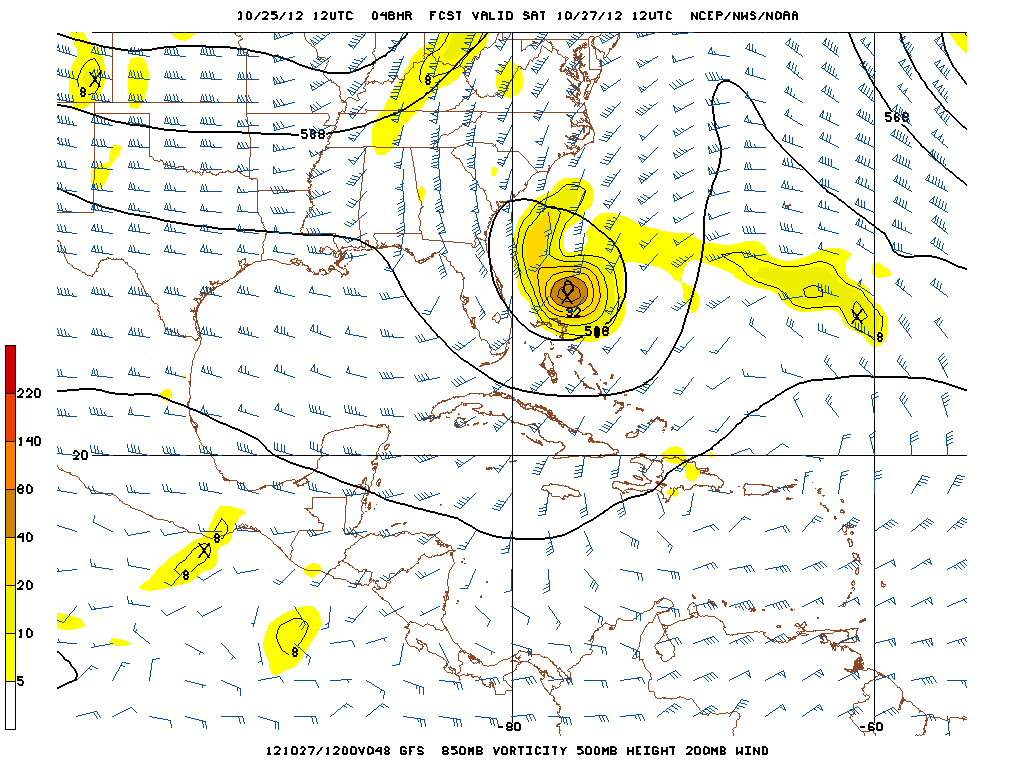
As Sandy moves through the Bahamas and off the southeast US coast it will merge with a mid to upper level trough of low pressure. On the map above, the black lines indicate isobars about 18,000 feet off the ground, and one can see the mid-level low that Sandy, represented by the ball of yellow and orange off the coast of Florida, combines with. While this happens, the winds located approximately 40,000 feet off the ground, represented by the wind barbs on this map, will pierce through Sandy from the south at over 50MPH. This will cause Sandy to acquire sub-tropical characteristics off the southeast US coast as we head towards Saturday. What does this mean?

  1. Sandy’s wind field will expand, but initially weaken.
  2. Precipitation will spread out farther from the center of Sandy.
  3. Sandy will retain a “warm-core,” meaning that heat from the ocean will fuel thunderstorms with Sandy.
  4. Sandy will also tap “baroclinic” sources of energy, meaning that it will begin to tap sources of energy from the jet-stream, changes in temperature, and will be more resilient to wind shear and lower sea surface temperatures.

These sub-tropical characterizes will become important, because as Sandy moves just off the southeast coast of the US Saturday and Sunday, it will not only tap the warm waters of the Gulf Stream, it will be near or under portions of three jet-streaks, shown above Sunday afternoon, that will ventilate the storm and provide plentiful lift. This will allow Sandy to maintain strong tropical storm or category 1 hurricane intensity through the weekend as it crawls northward off the southeast coast of the US. This much we know…it’s what happens after Sunday that may impact millions of people.

There are a number of players on the field for this potential major east coast storm. I have highlighted them on this evening’s GFS run, valid early Monday morning:

  1. First and forecast, a very large –NAO block over the North Atlantic will force the flow over the northwest Atlantic to turn south-southeast, towards the north-northwest, and in combination with a blocking ocean low, will make it difficult for Sandy to escape out to sea.
  2. The PNA over the Pacific and western N. America will go “positive,” which translates to ridging over the western US. This will force pieces of energy south over the northern Plains and Great Lakes, which will carve out a trough over the central US.
  3. As the pieces of energy attempt to move east, they will be blocked by the massive –NAO block and will have no choice but to carve out a sharper, deeper, and negatively tilted trough. This will further aid in turning the steering currents towards the north-northwest over the northeastern US and far northwestern Atlantic.
  4. Assuming the NAO block is as strong as currently projected on essentially all modeling, Sandy will have no choice but to be caught in these NNW steering currents, and come towards the Mid Atlantic or Northeast US coastline.

Let’s take a look at some of our forecast models and see if they track Sandy in this direction:

This afternoon’s UKMET, shown above, captures Sandy late, and pulls the storm towards Maine as a very strong storm system Tuesday morning.
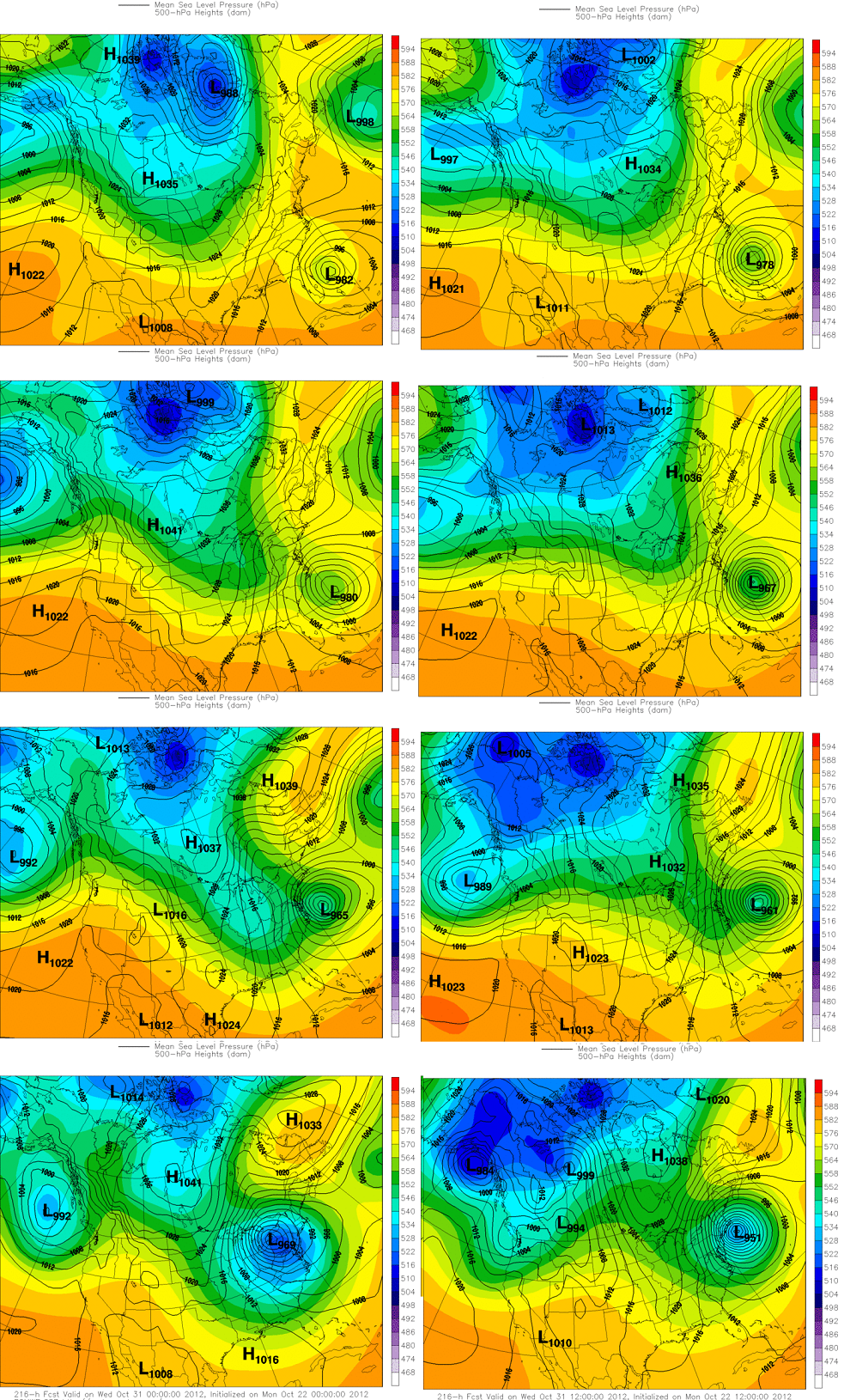
This afternoon’s GGEM (Canadian) model is very similar, taking a very strong storm system into the Boston area Tuesday morning.
This afternoon’s European model is much faster with the whole scenario and takes a still sub-tropical (and potent) Sandy into the Delmarva Peninsula on MONDAY.

The most recent GFS runs have been interesting. They have shown Sandy trying to escape out to sea, only to be kept in the fray by the large blocking high over the N. Atlantic, and eventually pulled back towards the Canadian Maritimes and New England by the Great Lakes trough that is forced to deepen and pull Sandy back in due to the +PNA ridge over the western US and strong –NAO block.

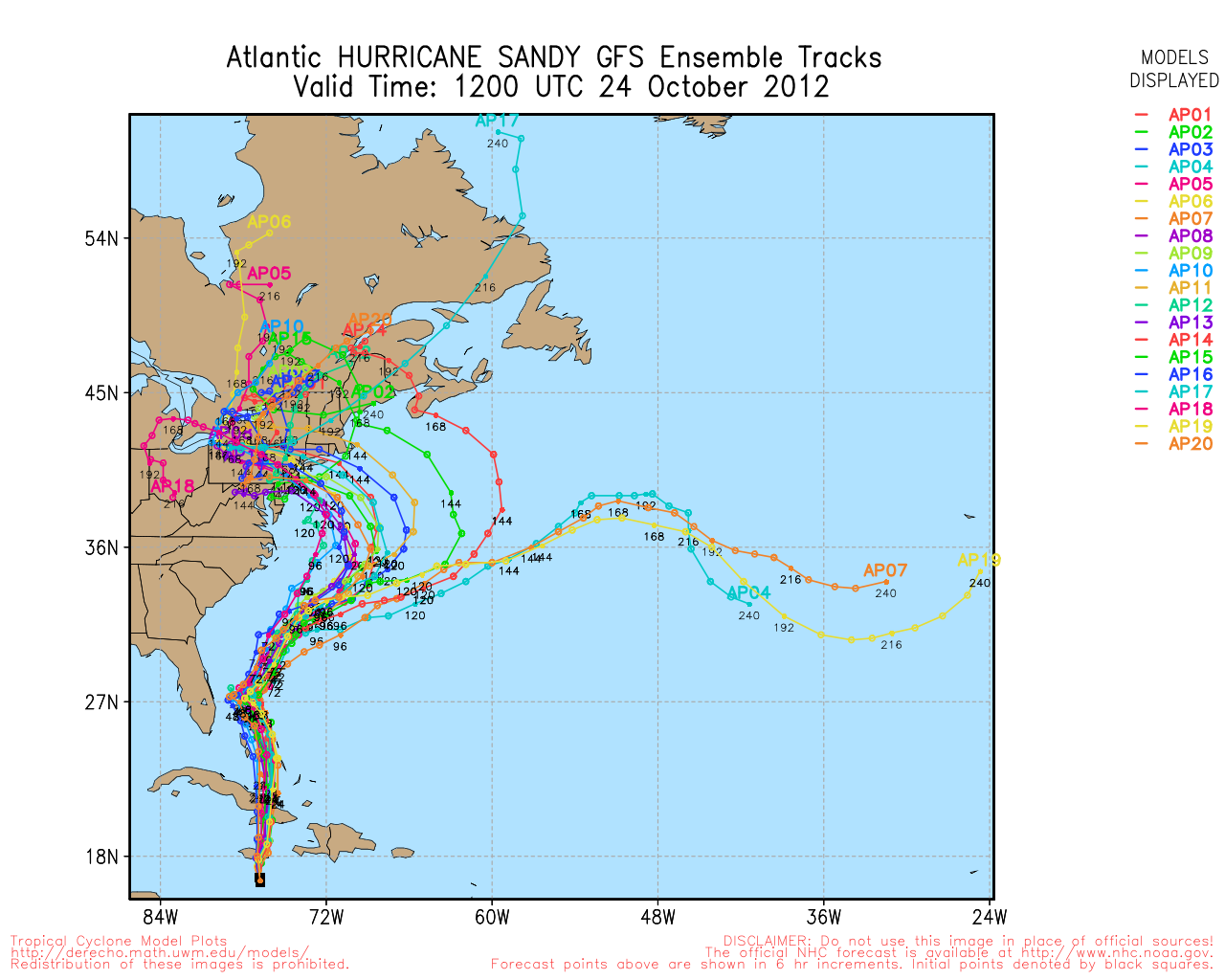
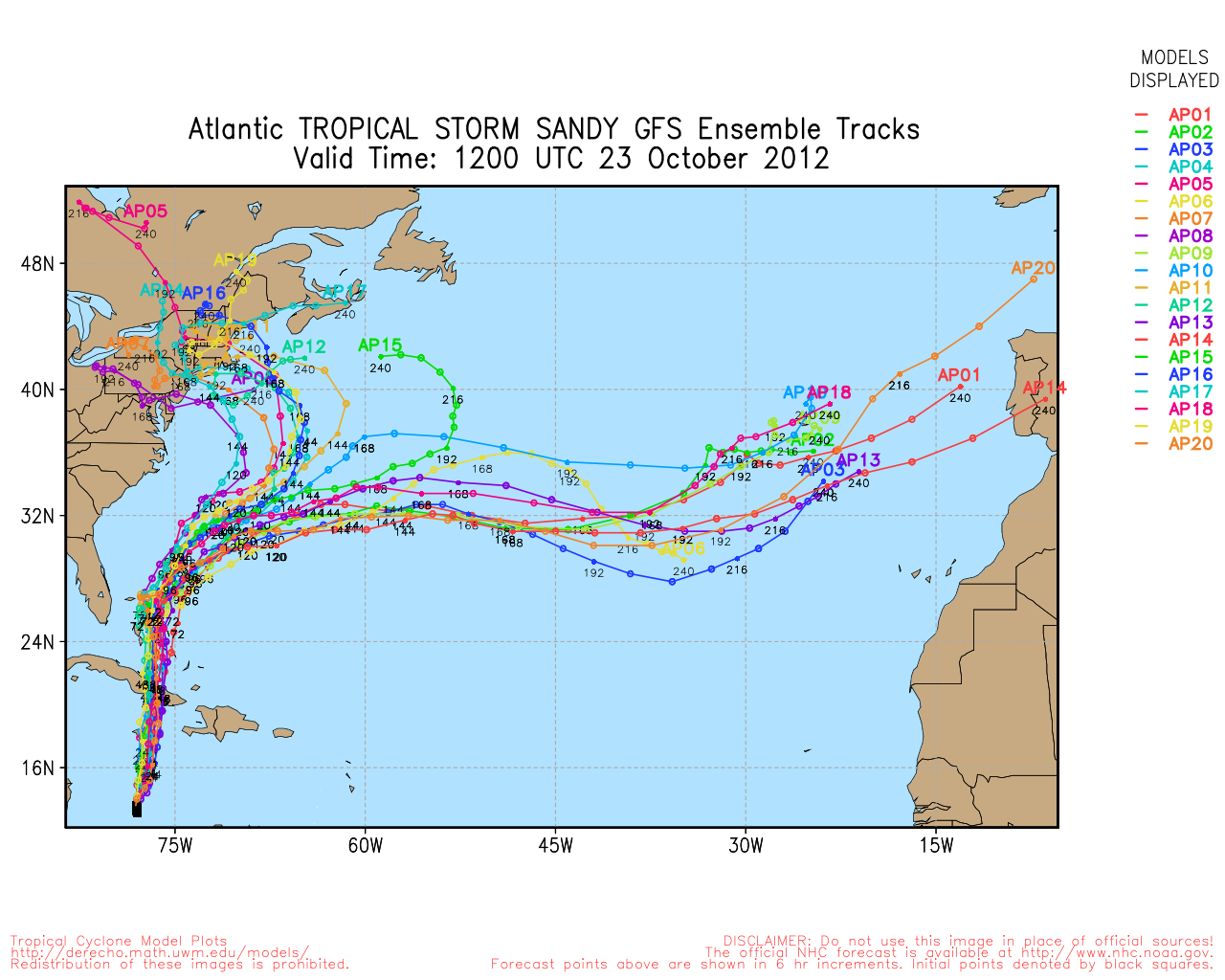
Regardless of western US ridging and central US trough depth and strength, the operational models have all found a way to sooner or later sling-shot Sandy towards the northeastern US due to the extensive blocking not only preventing the cyclone from escaping, but also forcing a trough to sit and deepen over the Great Lakes and Ohio Valley, which also aids in pulling Sandy in. The GFS, European, and GGEM (Canadian) ensembles all more or less pull Sandy in as well:

GFS ensemble tracks:

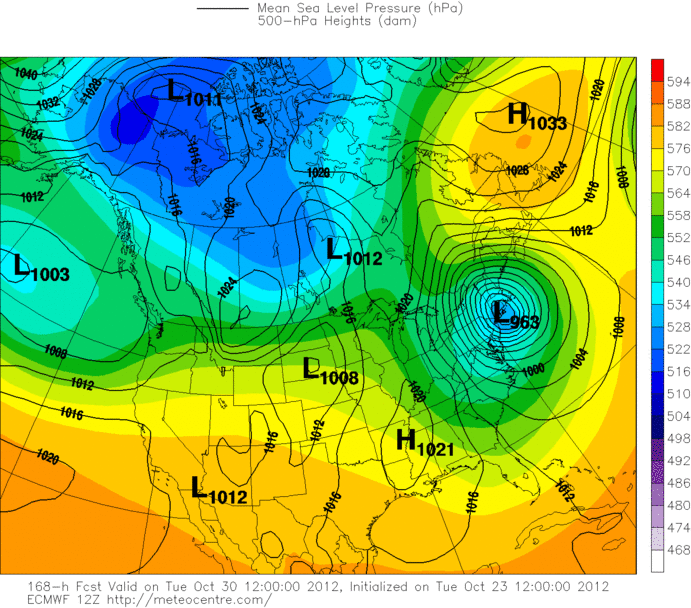
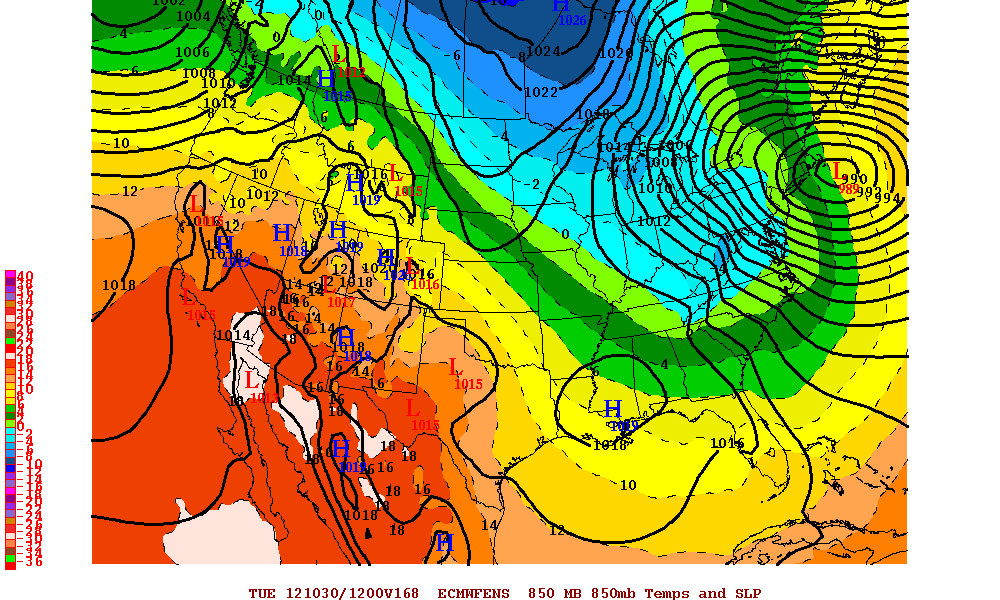
European ensemble mean valid Tuesday morning:

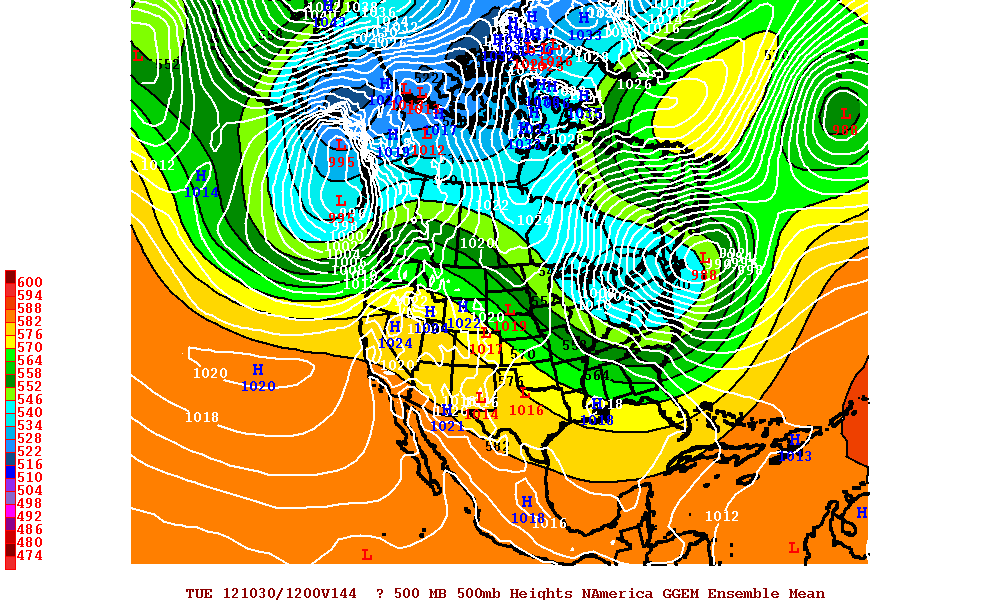
GGEM (Canadian) ensembles valid Tuesday morning:

So, this essentially has the unmitigated impact of saying the chances of a major impact from a hybrid tropical-nor’easter are increasing by the day over the northeastern US. Due to the strength of the possible system, strong damaging winds, coastal flooding, heavy rains and potential snow in the mountains of western NY, PA, WV and western VA are all impacts that may be felt from Virginia northward towards Nova Scotia, including the I-95 corridor from Richmond through Boston as early as Monday.

However, it is important to note that this forecast is not quite a certainty:

-If Sandy manages to move farther east than forecast over the Bahamas, it may still be difficult for the block and central US trough to draw it towards the US coastline.

-If the western US pattern ends up significantly flatter than shown, the central US trough may have a harder time deepening enough to capture Sandy. This is the potentially the biggest risk for this big storm forecast.

-If the blocking in the Atlantic ends up weaker than currently projected, it would take an extremely deep trough to capture Sandy.

As we head towards the weekend, this forecast confidence will increase. However, right now it is important to state that a strong storm is likely to track into or very close to the Mid-Atlantic and Northeastern US, and Canadian Maritimes Monday into Tuesday. Whether or not the system actually strikes the US or Canada is still a bit uncertain, but impacts, especially to the marine community, appear increasingly likely.

Right now I’d put the odds at Sandy making landfall over the Mid Atlantic or Northeast at about 60%…the chances of it missing but passing within 100 miles of the coast at 30%…and the chances of it missing by more than 100 miles at 10%.

There is also a chance of a “weaker” nor’easter developing and impacting the Northeast if Sandy stays out to sea, due to the depth of the potential trough over the Great Lakes and Ohio Valley.

I will have another post tomorrow afternoon on this situation.

Posted in Pattern Discussion, Storm Forecasts | 2 Comments

A Day Closer, Epic East Coast Storm Still on the Models

There she is, on the most recent run of the European model, the post-tropical remnants of Tropical Storm “Sandy” paying a visit to southern New England and the New York City area next Tuesday. As we slowly get closer to this possible storm, one must ask, might this actually happen? As I discussed yesterday, the models may still change into this weekend and it will be hard to lock in any kind of solution until at least Thursday or Friday. With that said, let’s break down some recent model data now:

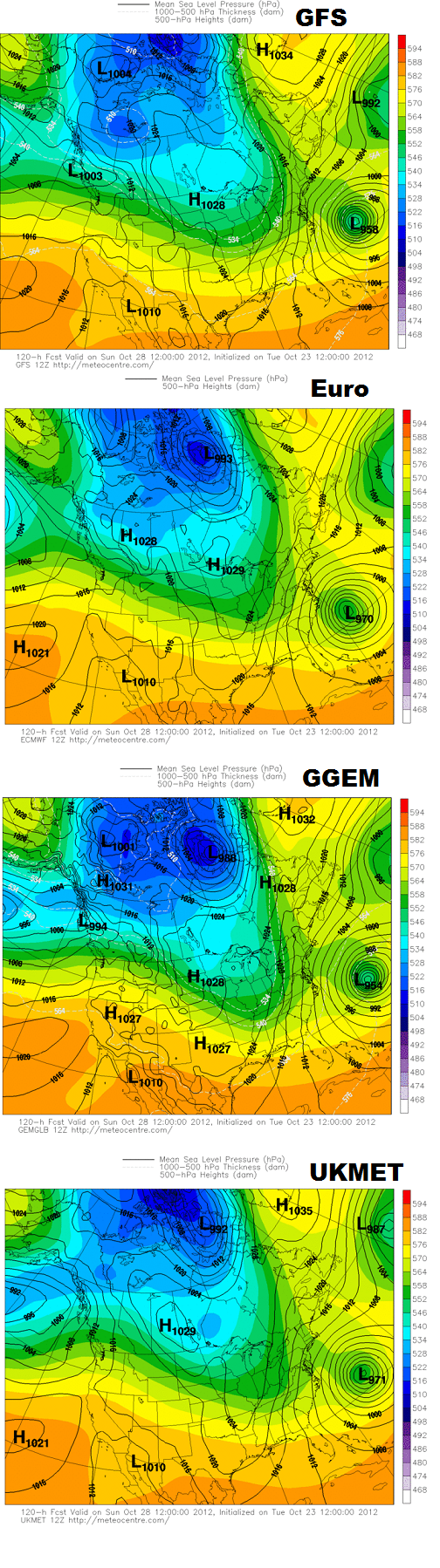
Above are our now four major global models that see out into early next week. The models are labeled and valid for Sunday morning. Let’s break down some key features on the models:

  1. Sandy itself: Out of all the models at this timeframe, the Euro is the farthest southwest with Sandy, the GGEM, or Canadian model, is the farthest northeast. The GFS and UKMET are somewhere in the middle. The Euro is the only model that successfully hit the eastern US with Sandy later in the run, so where Sandy tracks over the next few days may be important.
  2. The Pacific Pattern and western US ridging: Out of all the models, the GFS, like yesterday, remains the flattest model with the least ridging in the western US and the flattest trough in the central US. However, it has trended closer to the other models, and the difference is not huge. The GGEM model is the sharpest model out west, as it generally has been. This is interesting, because the GGEM doesn’t show Sandy hitting the eastern US, this run. The Euro and UKMET are in between the two extremes. In general, the models have trended a bit FLATTER with the western US pattern since Sunday, however the GFS remains an outlier, and is trending the other direction.
  3. The Atlantic Pattern: At this point in the model runs, this feature is reasonably similar on all four models. The UKMET appears to be a bit weaker with the Greenland ridging than the rest of the models, however, the GFS and GGEM are weaker with the ridging stretching from eastern Canada towards the central Atlantic. This is key, because it allows these two models to take Sandy out to sea.

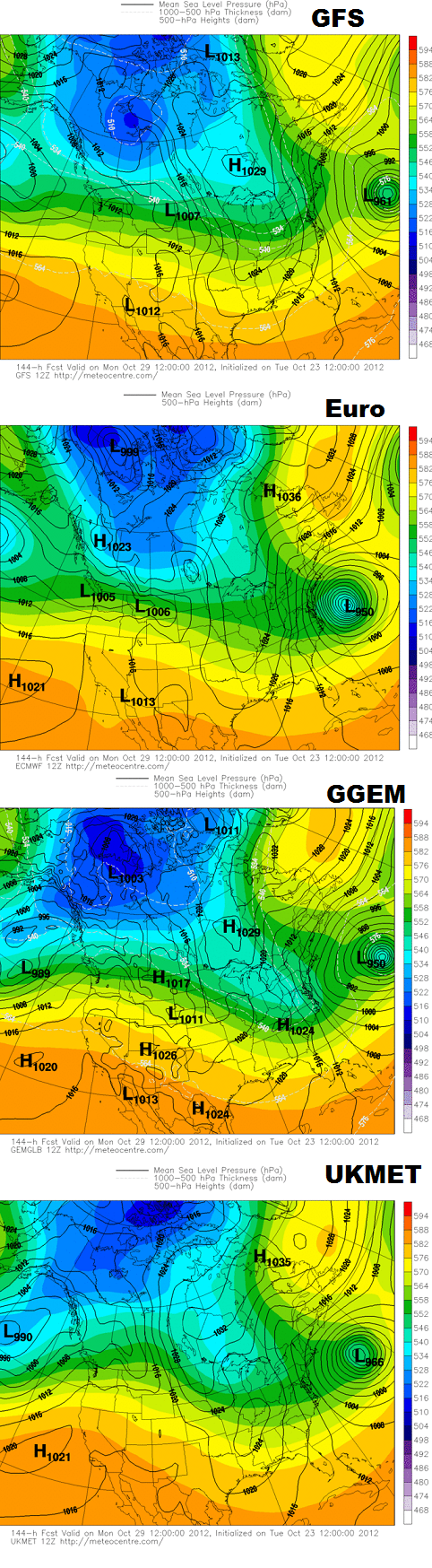
As we jump forward to Monday morning, let’s see what changes with the four main models.

  1. Sandy itself: The Euro is by far the farthest northwest with Sandy Monday morning. The GGEM and GFS are both far east, with the UKMET between the two extremes. The GGEM and GFS both fail to hit the eastern US with Sandy…the Euro ended up hitting southern New England and NYC with Sandy this run. The UKMET, if it ran out farther, would probably be out to sea, but may be close.
  2. Western US ridge and central US trough: The GFS remains the most progressive with the central US trough at this point. It is slightly deeper than the Euro’s depiction of the trough, but chugs it east faster. The UKMET and GGEM are both very deep and sharp with the trough, and would likely pull Sandy into the US IF Sandy wasn’t well out to sea by the time the trough approached the US east coast. The Euro is actually quite shallow with the trough, but because the blocking in the North Atlantic doesn’t let Sandy escape, the Euro still allows Sandy to be caught by the trough and pulled into the Northeast US. The Euro is also just slow enough with the trough that Sandy can get far enough north for a capture.
  3. The Atlantic Pattern: The Euro is the strongest with the blocking in the North Atlantic, the GFS the weakest. The Euro subsequently keeps Sandy closer to the coast than the rest of the models. The GGEM and UKMET are fairly strong with the block, but still manage to move Sandy east into the block. This seems suspect.

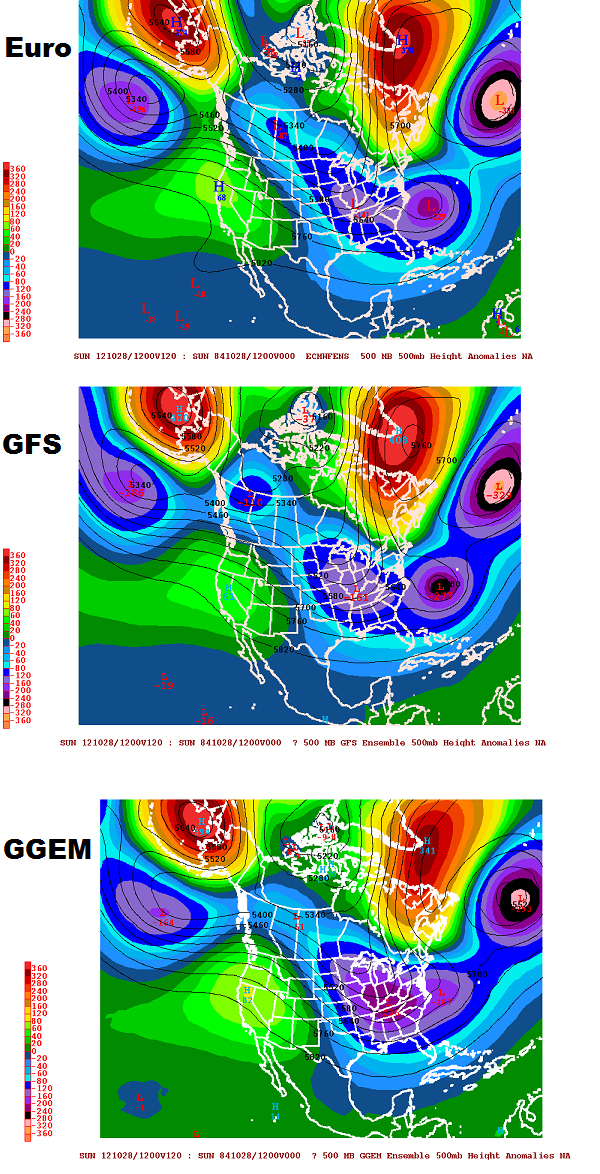
What do the ensembles say?

For the GFS, European, and Canadian (GGEM) models, each time the model runs, each country’s meteorological service runs the same model again 20-50 times with slightly different initial conditions. This allows for a blend of these solutions to possibly shed light on whether or not the operational versions of the models, discussed above, are out to lunch, or realistic.

-As we look at the North Atlantic, the GGEM ensembles, in general, are weaker with the blocking Sunday morning than the other two ensembles. This may indicate that the GGEM model’s fast speed with Sandy is an outlier.

-The GFS ensembles, when evened out, do not weaken the ocean low over the northeast Atlantic and allow Sandy to move right into it, unlike the operational model. This indicates that the operational GFS might not be accurately depicting how Sandy, the large ridge over Greenland, and the ocean low will interact.

-The GFS ensembles match the GFS with a flatter western US pattern…the GGEM ensembles match the operational GGEM with a more amplified western US ridge and central US trough. The Euro ensembles appear to match the operational Euro in showing a less amplified central US trough.

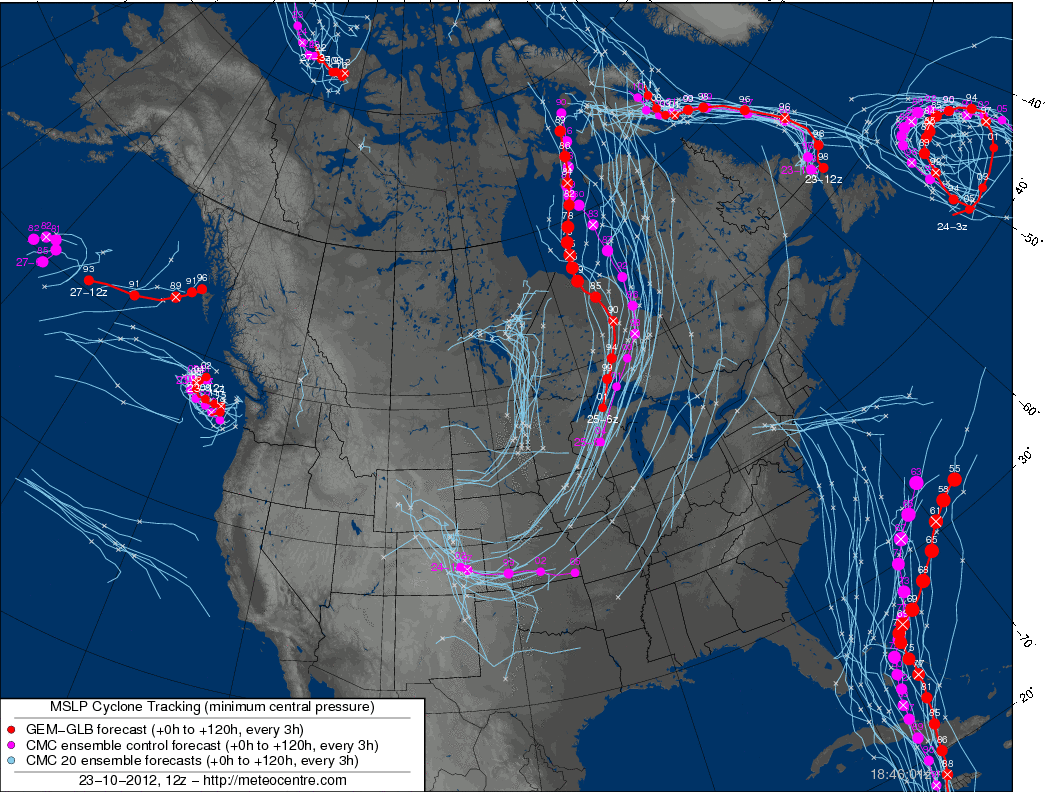
The GGEM ensembles, above, despite showing a weaker N. Atlantic block than the GFS/Euro ensembles, still manage to take Sandy closer to the US than the operational GGEM run. This is a red flag that the GGEM might trend back west in future runs.

The GFS ensembles, above, are split in what they want to do with Sandy. 9/20 members take Sandy into the NE US, 10/20 members match the op GFS and take Sandy well out to sea, and 1 member appears to be heading back towards the US at the last second. This indicates the operational GFS, which does not handle the N. Atlantic ocean low like the other models, may be in error in weakening the ocean low and tracking Sandy well east.

The Euro ensembles are very similar to the op Euro, indicating a New England threat early next week.

So, what does this all boil down to? There are still differences in the models in how blocking over the N. Atlantic plays out, differences in where Sandy tracks, and differences in how the western US ridge and central US trough play out. So despite the signs that perhaps are trending more towards a threat to the Northeast from Sandy next Monday-Tuesday, until we get a better idea of how blocking will play out over the Atlantic over the next couple days, until we get Sandy north of Cuba in a couple days, and until the energy that will carve out the trough over the central US is sampled on Thursday, we cannot reasonably sound any alarms, as the models will remain prone to large shifts.

My advice to anyone living in the northeast US, or SE FL as a shift west may bring Sandy in that direction, is to continue to monitor things, but not to panic until the models settle down a little more as we head towards the weekend.

Posted in Pattern Discussion, Storm Speculation | Tagged , , , | 1 Comment

Update on End of October Eastern USA Storm Threat

Another day’s worth of model runs have trickled in regarding the East Coast Storm Threat to end October. So, what did our major models do?

GFS

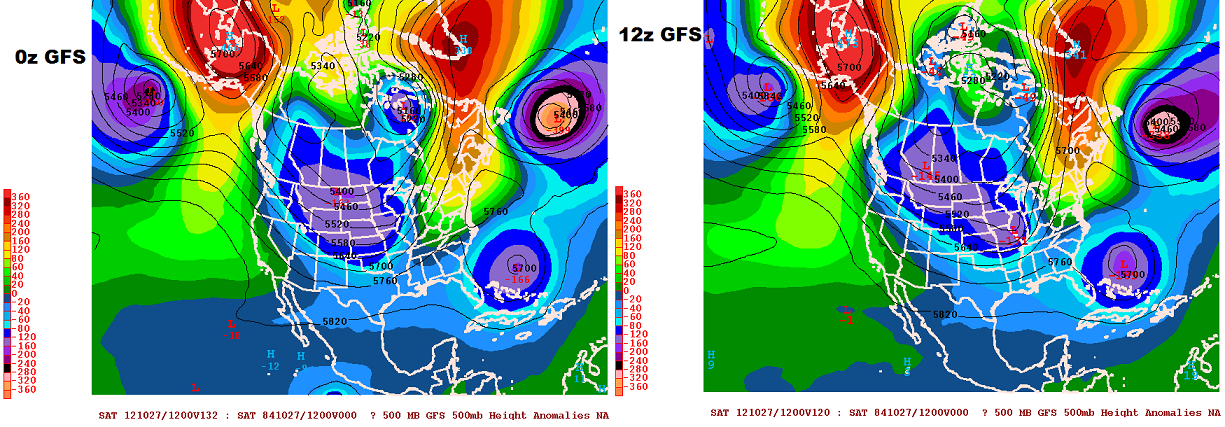
As we jump forward to Saturday, there are already differences on the GFS between last night’s run and today’s run.

-First of all, today’s run, on the right, is a little stronger and farther southeast with TD 18.

-The lead shortwave in the central US is more progressive (as in faster and not as deep) on the 12z run than on the 0z run, due to another shortwave diving into the US on the 12z US that was not there on the 0z GFS.

As we head to Saturday evening, the differences persist. On the 12z GFS on the right, TD 18 is still a bit stronger. The 12z GFS is actually a bit more impressive with the ridging over Greenland/eastern Canada and father west with the North Atlantic Low than the 0z run, however the trough over the central US is rather flat on the 12z run, as the shortwave continues to dive into the western US and broaden out the trough.

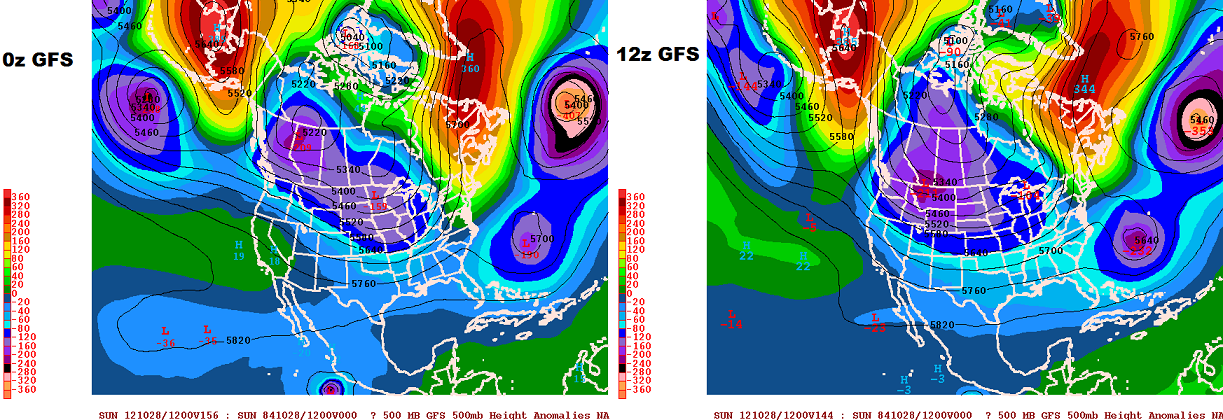
As we head towards Sunday morning, today’s (12z) run of the GFS continues to be a bit stronger and a little farther SW with TD-18 (near Bermuda) than last night’s (0z) run of the GFS. However, the central US trough is flat and not negative tilted, again due to a shortwave digging over the Rocky Mountains. On the 12z GFS, the Gulf of Alaska low pressure is also a bit weather and a bit farther north.

And finally, the Sunday evening of the GFS image. In both model runs (last night on the left, today’s on the right), the tropical entity (TD 18) is near Bermuda and moving out to sea. The system remains stronger on the 12z GFS than the 0z GFS. On both images, the ocean low over the northern Atlantic is beginning to move east, however the 12z GFS was more aggressive in weakening the ocean low and dropping it southeast. In either case, the trough does not capture the tropical cyclone, and there is enough of an escape hatch over the northwest Atlantic for TD 18 to escape out to sea, on the GFS.

Overall thoughts on the GFS:

There were changes in many regards from last night’s GFS run to today’s run.

  1. Today’s run dropped a new shortwave into the western US on Saturday, which consequently flattened the troughing in the central US compared to the 0z. Today’s run also weakened the North Atlantic low a bit more than last night’s run. This eventually gave TD 18 a chance to escape.
  2. With regards to TD 18 itself, the 0z run was better synoptically for the system to be captured by the central US trough, however the system itself was weaker and a bit farther northeast on the model than the 12z run. The 12z run was a bit stronger and farther SW with TD 18 initially, but this time, the synoptics did not favor it being picked up by the central US trough.

Canadian Model

Last night’s Canadian model is on the left…today’s Canadian model is on the right…images are on a 12 hour interval from Saturday morning through Sunday evening. There are some interesting differences between the two runs of the model:

  1. Last night’s 0z run was very deep and sharp with the central US trough. Today’s 12z run was much broader with the trough, resulting in a later phase.
  2. Last night’s 0z run was much stronger with the NW Atlantic ridging. This resulted in a slightly farther southwest track of the tropical entity (TD 18) prior to phasing with the central US trough.
  3. Like the GFS, today’s 12z run of the Canadian model was notably weaker with the Gulf of Alaska low pressure, which resulted in less ridging in the western US and a broader trough in the central US.

Regardless, both runs of the model showed a very strong system making landfall over the Mid-Atlantic either Sunday or Monday. However, the Canadian kind of trended towards the GFS, with a broader central US trough, a weaker Gulf of Alaska Low, and a somewhat weaker block in the northern Atlantic. The model still produced an epic coastal storm, however.

European Model

When doing a similar comparison between last night’s 0z Euro run (left) and today’s 12z Euro run (right), let’s see what things can be noticed. It should be noted that Euro images are only available every 24 hours, so the comparison isn’t quite apples to apples, but it works well enough.

  1. The 12z and 0z Euro runs were very similar in how they handled the Greenland/eastern Canada ridging and the North Atlantic ocean low.
  2. Although the 12z Euro was more progressive and a bit flatter with the central US trough than the 0z run, the trough ran into the block and had no choice but to dig south and pick up the tropical entity, TD 18, and phase it into a monster storm for New England in 9 days.
  3. The 12z Euro is different than the 0z Euro with it’s handling of northern Pacific features. The 12z Euro initially weakens the northern Pacific blocking (which has been a trend 12z overall) quicker than the 0z Euro did, HOWEVER it develops a new +PNA low over the Aleutian Islands, which raises heights in the western US just soon enough to help amplify the central US trough and aid it in phasing with TD 18.

Overall thoughts on the model trends today:

  1. Today’s 12z runs, in general, did trend a little bit away from an extreme solution. Before you tell me that the European and Canadian models did have extreme solutions, they both trended flatter with the central US trough, broke down blocking the Pacific quicker, and the Canadian had a weaker North Atlantic Block today than last night.
  2. It should be noted that despite the above, both the Euro and Canadian models did still produce extremely strong east coast storms in a week or so.
  3. In general, the extreme coastal storm idea is not any more or less likely than yesterday. Small changes in the North Pacific, which is a very poorly sampled region of the world, had bigger changes downstream over the US.

It will still take a few days to conclusively say whether or not this big storm idea will come to fruition. It will still be at least Thursday when the energy that will carve out the central US trough is over the N. American sampling network, and not until Wednesday or so when we get a better idea on what blocking over the Northern Atlantic will do. The big storm solution still remains possible until some of these questions are answered, but it is still much too early to sound any kind of alarm, because things still can and will change.

Posted in Pattern Discussion, Storm Speculation | Leave a comment

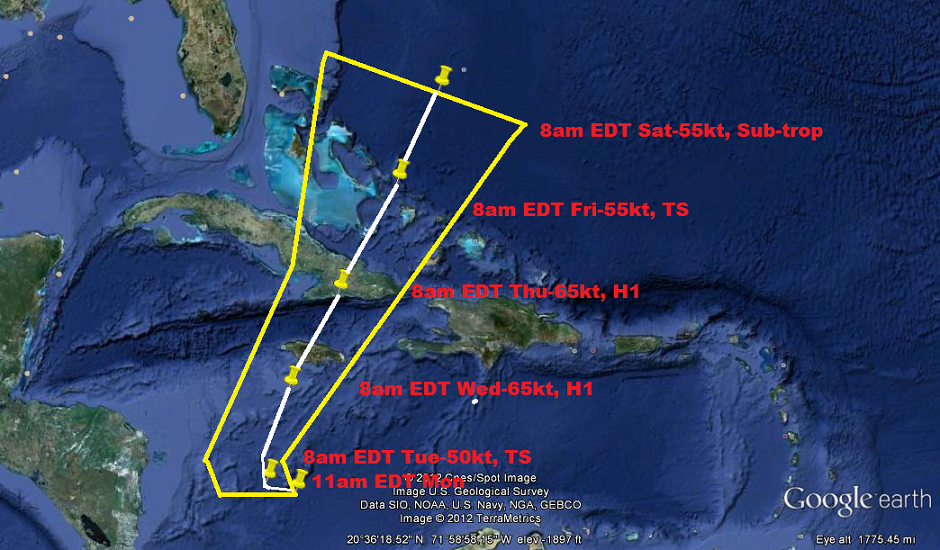
Tropical Depression #18 Forecast/Discussion

This forecast/discussion is a 5-day forecast for the tropical element of the large storm modeled over the eastern US. I will post a separate discussion covering what happens past 5 days later this afternoon.

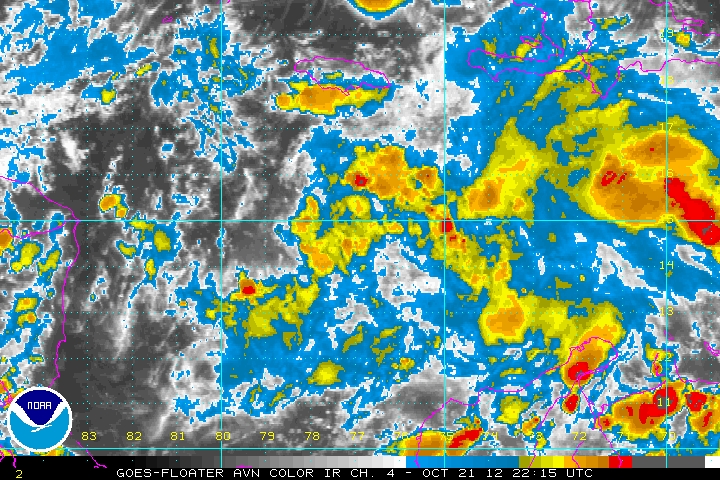
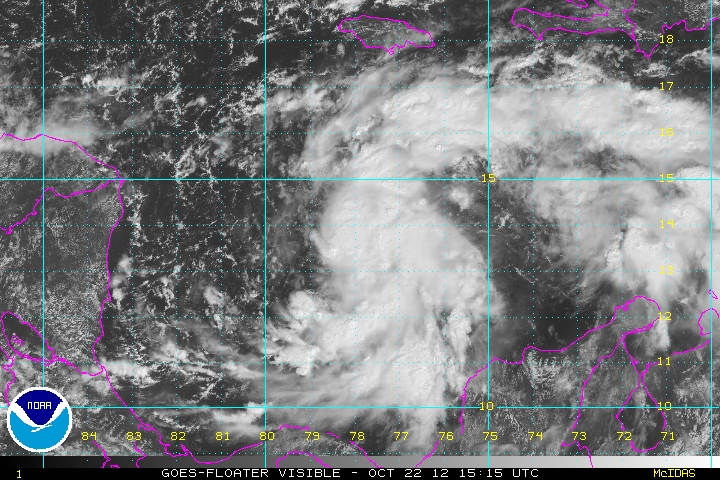
Above is a look at TD 18 as of 11:15am EDT. The depression has organized considerably since yesterday, with a much more consolidated area of convection over the center of circulation. Outflow is fair to the north and south of the system but not great.

An examination of recent microwave imagery shows that there is a hint at a curved but over the northern and eastern semi-circle of the system, with the center within a few miles of 13.5N, 78W in this image per the National Hurricane Center. If the system can continue to organize banding and consolidate, it may become a tropical storm later today and will likely become a tropical storm tonight. Assuming an invest in the open Atlantic does not become named sooner, TD 18 will assume the name “Sandy” when it reaches tropical storm strength.

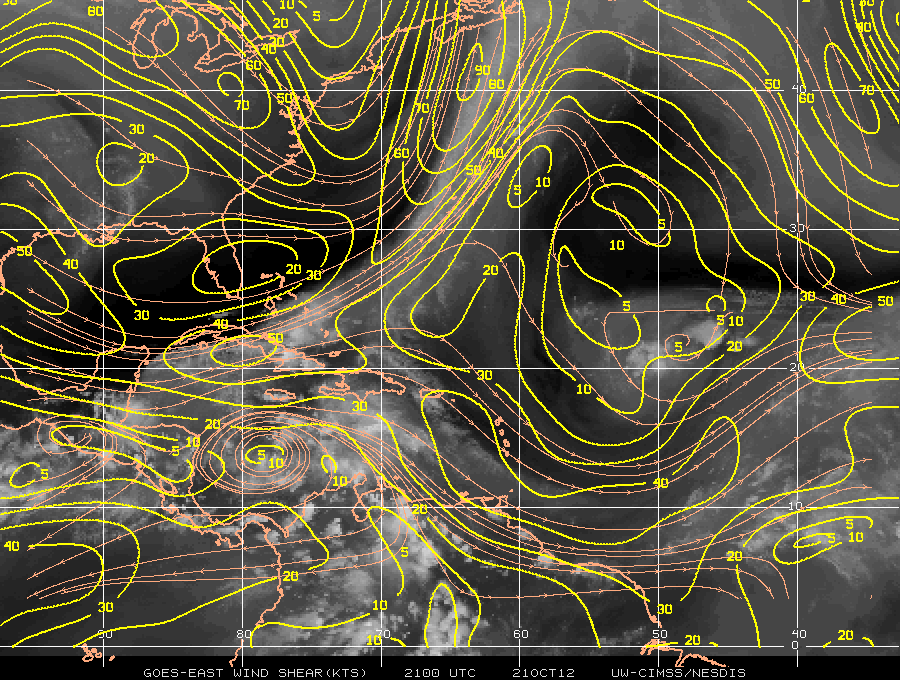
As discussed yesterday, as 18L drifts farther SW it positions itself under decreasing wind shear, which promotes organization. There is a belt of sub-tropical westerlies to the north of the cyclone which is aiding in venting the system…which can be seen with cirrus clouds moving away from the system in the northern semi-circle. As the system drifts southwest into tomorrow, it will remain under favorable upper level conditions for intensification.

http://mag.ncep.noaa.gov/NCOMAGWEB/appcontroller?prevPage=Model&MainPage=index&image=&page=Param&cycle=10%2F22%2F2012+12UTC&rname=UPPER+AIR+PARMS&pname=850vor_500ht_200wd&pdesc=&model=GFS&area=WNATL&cat=MODEL+GUIDANCE&fcast=5+Day+Loop&areaDesc=Western+North+Atlantic+-+Southeast+US+Central+America+Caribbean&prevArea=WNATL&currKey=model&returnToModel=&imageSize=M

This 5-day animation of the GFS shows that upper level winds (barbs on map) remain in the 10-20 knot range over the system until it approaches Cuba, before increasing significantly. Due to the very warm waters under the system, and the expectation that 18L will have about 48 hours of light to moderate wind shear and good upper level divergence, if 18L can consolidate a bit further today and tonight it may overperform and become a strong system before shear begins to take its toll in about two days and Cuba shortly thereafter. Will somewhat blend the idea of a more robust system with current ATCF intensity guidance and show 18L becoming a minimal hurricane before impacting Cuba.

After passing Cuba, the global models show 18L interacting with strong upper level southwesterly winds. However, the models generally show the system maintaining or lower its pressure with an expanding wind field, showing that the system will get a shot of baroclinic energy, and also meaning the system will not be completely tropical:

Due to this, will match the NHC and indicate a sub-tropical storm for the day 5 forecast.

As for the track forecast, the system will drift southwest for the next 12-24 hours due to strong low level ridging to its north. However as a trough over the central US impinges on this ridging it will weaken and slide to the east somewhat, allowing a slow north to north-northeast motion to occur.

Note how on the 0z Euro Ensembles, there is ridging surrounding the depression in all directions, with the weakest ridging being to the N-NE. The system will follow the path of least resistance to the NNE starting in about 24 hours, and this general motion will continue through the 5-day forecast period.

Forecast track/intensity:

Posted in Storm Forecasts | Leave a comment

A Model Fantasy: Most Reliable Global Models Forecast Epic Storm in About Eight Days over Northeastern US

It has been the talk of weather enthusiasts and meteorologists alike this Sunday in late October, with the Euro, Canadian, and to some extent the American GFS model showing a complicated interaction between a tropical cyclone that forms in the Caribbean and a deep upper level trough that dives into the central US and captures this tropical cyclone, resulting in a strong storm over the Northeast US. Let’s break down what needs to happen for this extreme solution to occur and examine how likely something like this is.

First and foremost, a key piece to the puzzle is what happens to this festering area of low pressure in the Caribbean Sea. The three major global models mentioned above eventually develop this into a moderately strong tropical cyclone over the Bahamas. However, right now the system is not very well organized, with a lack of deep convection near the center of circulation.

This is likely due to two reasons. First of all, 99L is encountering 10-20 knots of westerly wind shear. In addition, as can be seen below, the invest is a sprawling system, part of what’s called a monsoonal gyre:

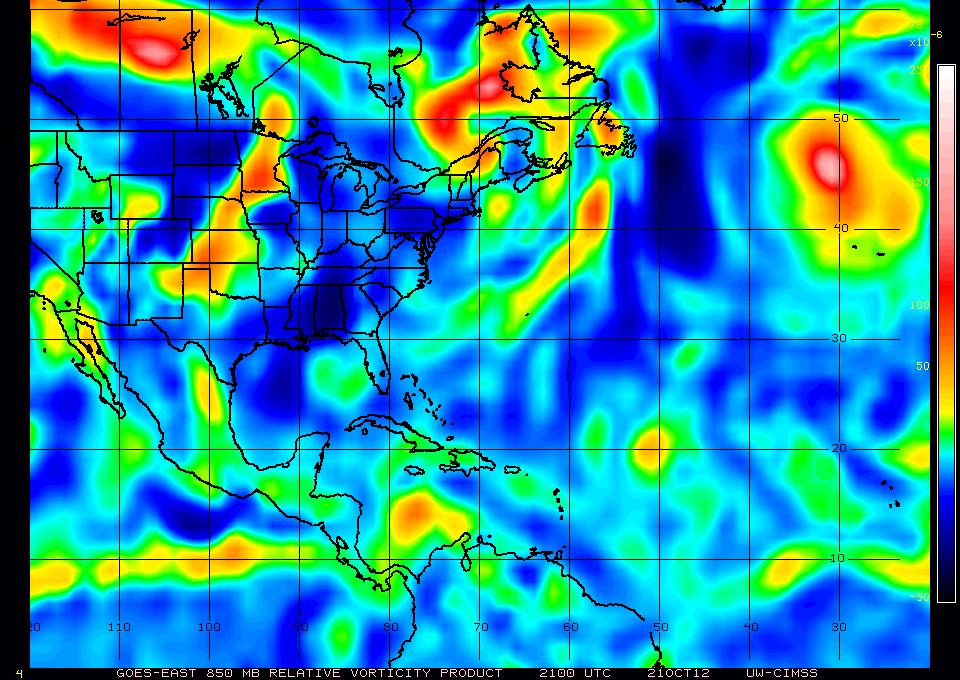
There is low level vorticity, or spin over a large chunk of the central Caribbean Sea associated with this system. This combined with the above mentioned shear is making it hard for 99L to consolidate. However, there is a concentration of higher vorticity south of Jamaica, and this is what most models eventually spin into a tropical cyclone.


As a shortwave over the northwestern Atlantic misses 99L to the north, the invest should slowly drift towards the west of southwest over the next couple days. This part of the forecast is generally well agreed on by our models at this time. As we head towards Tuesday-Wednesday, a longwave trough will begin digging over the central US, and this will slowly squeeze ridging over the southeastern US, drawing 99L northward:

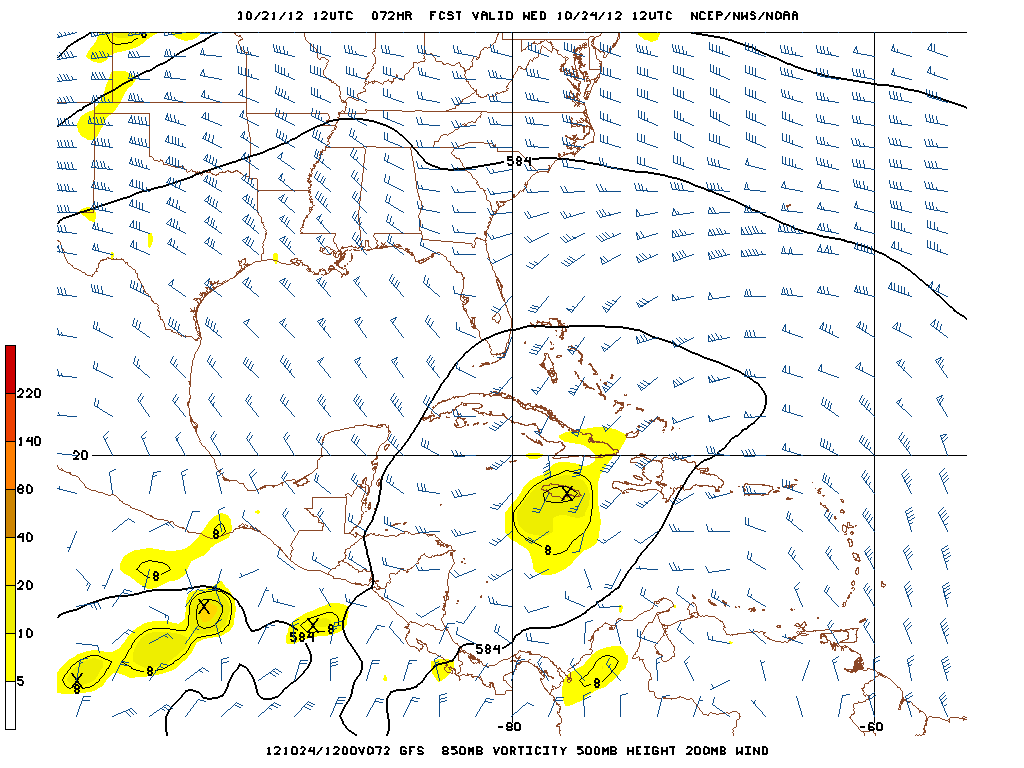
http://mag.ncep.noaa.gov/NCOMAGWEB/appcontroller?prevPage=Model&MainPage=index&image=&page=Param&cycle=10%2F21%2F2012+12UTC&rname=UPPER+AIR+PARMS&pname=850vor_500ht_200wd&pdesc=&model=GFS&area=NAMER&cat=MODEL+GUIDANCE&fcast=5+Day+Loop&areaDesc=North+America+-+US+Canada+and+northern+Mexico&prevArea=NAMER&currKey=model&returnToModel=&imageSize=M

5 day GFS loop can be viewed at the above link.

This will likely result in a track near or just west of Jamaica, towards Cuba and into the Bahamas in 4-5 days. How strong the system gets while in the Caribbean is in question.

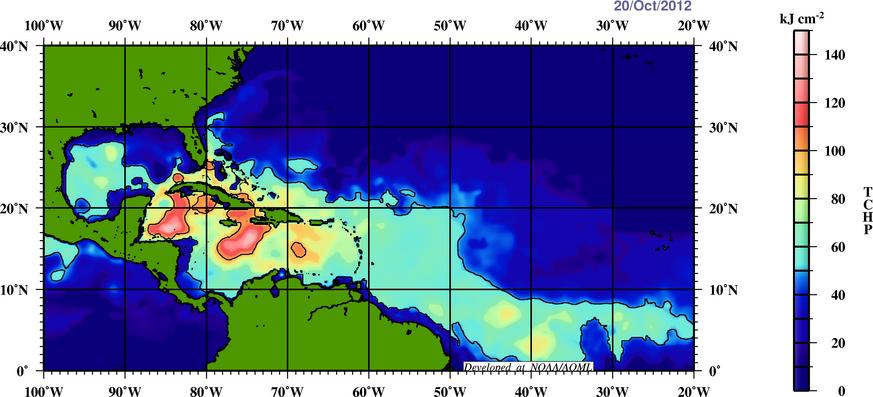
There are hints that as the low pressure area sits near or south of Jamaica that it will be in a favorable upper level environment with low wind shear and good upper level outflow. As can be seen above, the 3-day GFS projection shows 10-20kt upper level winds over 99L with a belt of sub-tropical westerlies venting the system. In addition, even though we are approaching November, waters in the western Caribbean still contain a ton of heat:

Needless to say, if 99L can consolidate into a smaller system before moving north towards increasing shear Tuesday into Wednesday, it may become a formidable cyclone before impacting Cuba.

However, given the gyre origins of the system, a looser, weaker system is probably more likely until the system clears the Caribbean around mid-week. Given the amount of time the system will sit in the Caribbean and the generally favorable environment for organization/intensification, I am fairly confident a tropical cyclone will form near or south of Jamaica over the next two to three days and then lift north towards Cuba

Once 99L clears Cuba is when the uncertainty goes from “normal” to “high”, which is not too uncommon for tropical cyclones or weather forecasts in general:

The GFS, Euro, and Canadian all appear to be in decent agreement in phasing 99L with an upper level trough (shown over the Florida Straits in this image with 99L over the central Bahamas) towards the end of this week. This results in 99L becoming a larger system and in deepening of the system—which would likely become sub-tropical after a merger with a cold-core upper level trough.

And at this point, this is when the insanity on this afternoon’s global models began:

99L is expected to drift to the north or north-northeast over the Bahamas into this upcoming weekend. After this happens, there are two main options:

  1. The westerlies associated with the longwave trough digging over the central US push 99L out to sea.
  2. As shown above, the trough takes on a negative tilt over the central US and draws 99L westward, resulting in a phasing of these two systems and a potentially high impact storm somewhere over the eastern US.

Normally, option 2 would be the much less likely scenario, and in this instance, it still is, but let’s explore what makes option 2 a possibility at this point:

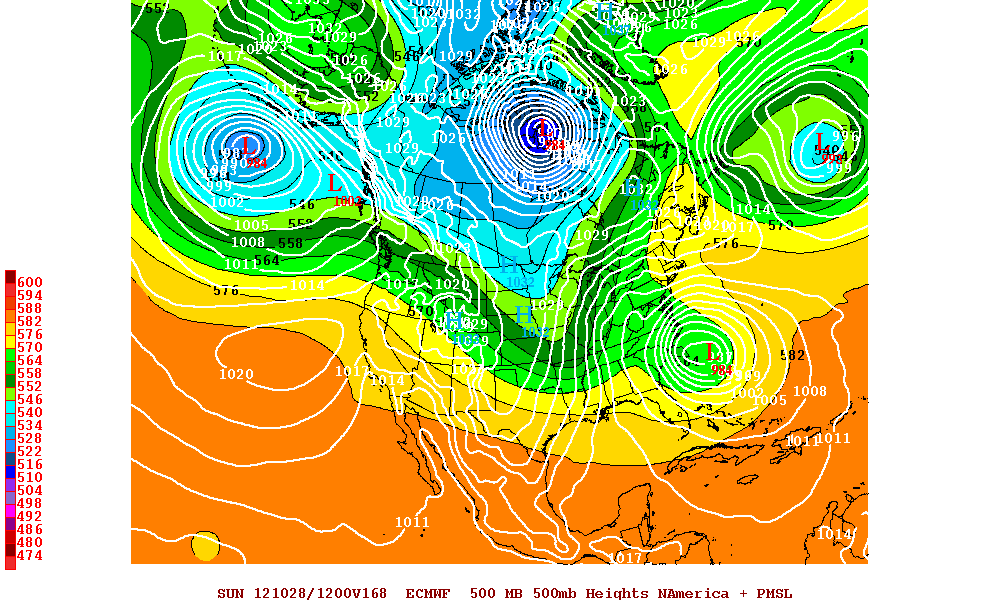
The short answer is the extreme blocking occurring. Note the extremely strong ridging occurring over Alaska and Greenland on this 5-day ECM Ensemble forecast. These two ridges help facilitate a cross polar flow which aims arctic air towards the central US, resulting in a deep trough forming in that area.

In addition, the ridge over Alaska is pinning a very strong low pressure system over the Gulf of Alaska, which will send energy southeast towards the US and help deepen the central US. The Greenland ridge is pinning a strong 50/50 low near Newfoundland, which blocks up the flow over the eastern US, and combines with ridging over the eastern US to keep 99L from racing out to sea. If 99L moves out to sea, it will take its time to do so.  This increases the chance for a tropical entity and a deep polar trough phasing near or over the eastern US next weekend.

In addition, the blocking will result in a very strong northerly jet streak being dislocated very far south of this time of year. Per the Euro above, much of the Eastern US will be in a zone of good upper level lift, provided for by two jet streaks. This will favor an intensifying storm, potentially dramatically so with by my count two pieces of jet energy and one piece of tropical energy possibly involved, over the eastern US, if 99L is drawn westward by the incoming central US trough next weekend.

Now, let’s remember to throw caution to the wind. There are several things that need to happen for this extreme solution to play out:

  1. 99L must develop further. Into either a tropical cyclone over the Caribbean that transforms into a potent sub-tropical system in the Bahamas, or just a sub-tropical cyclone over the Bahamas. If we have a fairly potent system near the Bahamas in 4-5 days, one way or another, this requirement will be met.
  2. Strong –NAO blocking must occur as progged and peg a strong 50/50 low near Newfoundland in the short term and the north-central Atlantic in the mid-term. This will allow a “ridge-bridge” to occur between ridging over the eastern US and ridging over Greenland, and make it much harder for 99L to move much farther east than the US east coast.
  3. A piece of energy must break off of the Gulf of Alaska low by Thursday as the Euro and GGEM show. This is key to digging out a deep enough trough in the central US.
  4. The trough over the central US must not be flat and progressive, otherwise it will shun 99L out to sea. We need a deep trough that becomes negatively tilted by next weekend.


These details will slowly become clearer as the week moves on…we should know more about the development chances for 99L by Tuesday or Wednesday…we should know about what the –NAO will do by Wednesday or Thursday…we should know what kind of energy does or doesn’t break off of the Gulf of Alaska low by Thursday…and by Friday this energy will be sampled over western North America, which will give us a good idea of what kind of a trough we will see over the central US.

Essentially, until these details slowly work themselves out, it will be a model guessing game as to what will happen next weekend into early next week. While no one of the above 4 “requirements” are off the wall, we need them to occur perfectly for a high-amplitude storm to occur, which is why situations such as these, which haven’t occurred since Halloween of 1991 (perfect storm) or Hurricane Hazel in 1954 are so rare over the eastern US.

Posted in Pattern Discussion, Storm Speculation | Leave a comment

2012-2013 Winter Outlook

OHweather 2012-2013 Winter Forecast.

First off…my previous two winter forecasts…10-11 with images in tact:

http://www.easternuswx.com/bb/index.php?/topic/238909-my-2010-2011-winter-forecast/page__p__5138499#entry5138499

09-10…images not in tact:

http://www.easternuswx.com/bb/index.php?/topic/206386-my-2009-2010-winter-outlook/page__p__4104997#entry4104997

Just in case anyone was curious. I did not make an outlook last year.

Pacific Pattern:

Above is a current look at the sea surface temperature anomalies across the Atlantic and Pacific Oceans. An El Nino began to develop over the summer, but appears to have lost some steam with a cold tongue of water near the equator over the eastern Pacific. There is a warm gyre of water over the northwest Pacific stretching to the east around a cold pool of water near the Aleutian Islands, with cooler water near the west coast of the US/Canada.

ENSO State:

As mentioned above, the eastern Nino regions have cooled notably of late. The western most Nino region has held steady, however we are not truly in an El Nino at this time.

Beneath the surface, previously warm waters have been replaced by near normal or even slightly below normal water temperatures during the month of September and into October. This does not bode well for an attempt at developing an El Nino, as any upwelling will bring cooler subsurface waters to the ocean surface and further weaken any attempt to develop an El Nino.

http://www.longpaddock.qld.gov.au/seasonalclimateoutlook/southernoscillationindex/index.php

Although the 90-day average SOI is weakly negative, September and thus far October have featured predominantly positive SOI’s. This contributes to stronger trades over the equatorial Pacific, which enhances upwelling of cooler water to the ocean surface, and as mentioned above, these sub-surface waters are near normal and will thwart any developing El Nino if upwelled.

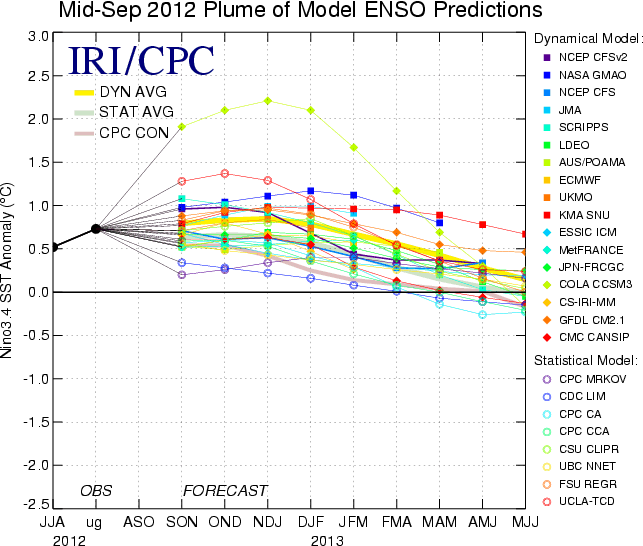
The most recent ENSO forecast models plume shows some potential additional warming in ENSO region 3.4 through the fall, but nothing significant. Given the waters in the Nino regions have cooled further since these models were initialized, it appears unlikely that we will see a moderate or strong El Nino in the DJF timeframe. The best bet is for a warm but neutral ENSO this winter, with some chance at a weak Nino, although those chances don’t appear to be too high at this time.  The warmest waters will be in the western Nino regions.

PDO:

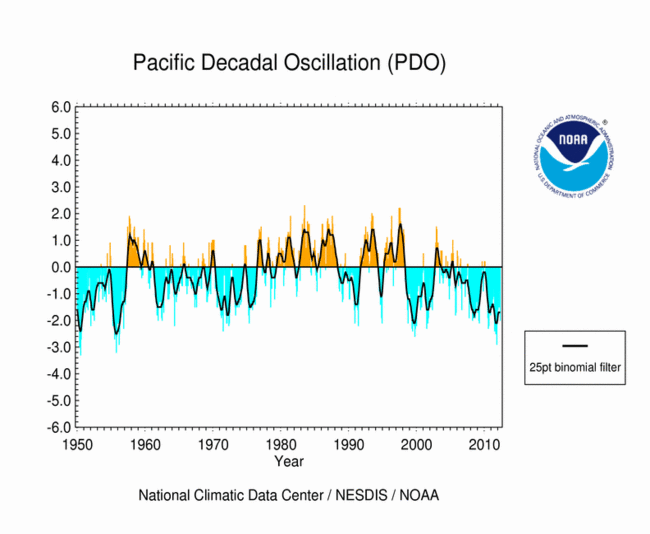
The Pacific Decadal Oscillation (or PDO) is a cycle of sea surface temperature anomaly placement over the entire Pacific Ocean that generally maintains itself for two to three decades. The current sea surface temperature anomaly map posted above more closely matches the right hand picture, which is the cold phase of the PDO, although the cold pool that has recently developed near the Aleutians gives it a bit of a neutral look.

However, we are currently in a multi-decadal cold phase of the PDO and the overall current look remains cold. So, for my expected Pacific pattern, I am using analogs that consisted of neutral warm ENSO conditions and cold PDO conditions…

DJF SST Composite of my Pacific Analogs:

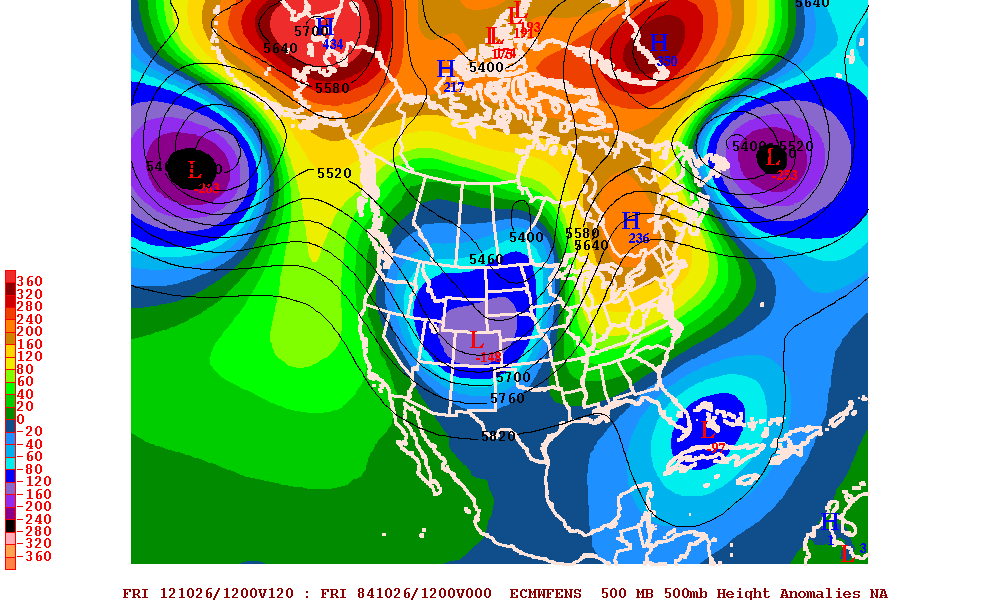
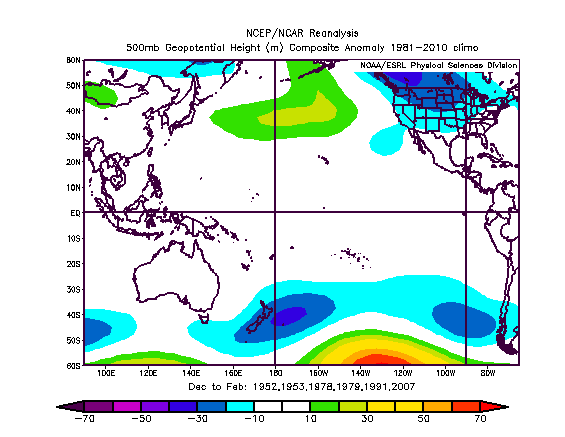
DJF 500mb height anomalies with above SST based analogs:

The pattern shown is interesting but in general matches –PDO climo…with a negative PNA and resulting troughiness over the western/central US. It should be noted that there are only limited signs of an enhanced sub-tropical jet in the above composite image, with the only signal being a negative anomaly off the SW coast of the US. This points to a more active polar jet than normal with a slightly perkier subtropical jet in the analog years. Precipitation anomalies in these years did show slightly above normal precip across the southern/eastern US these years in all three winter months. It should be noted that for the above image, I was ONLY considering Pacific sea surface temperatures, and it is only one variable being looked at for this composite map. When looking at the month by month breakdown, the troughing was focused in the western and central US in December and January, and farther east in February.

Potential for High Latitude Blocking

As is generally well known, high latitude blocking forces the jet stream to buckle more frequently and become amplified, which allows for stormier conditions and more extreme temperature anomalies. High latitude blocking is nearly as important to what occurs during a winter as what happens out in the Pacific Ocean.

Quasi Biennial Oscillation (QBO):

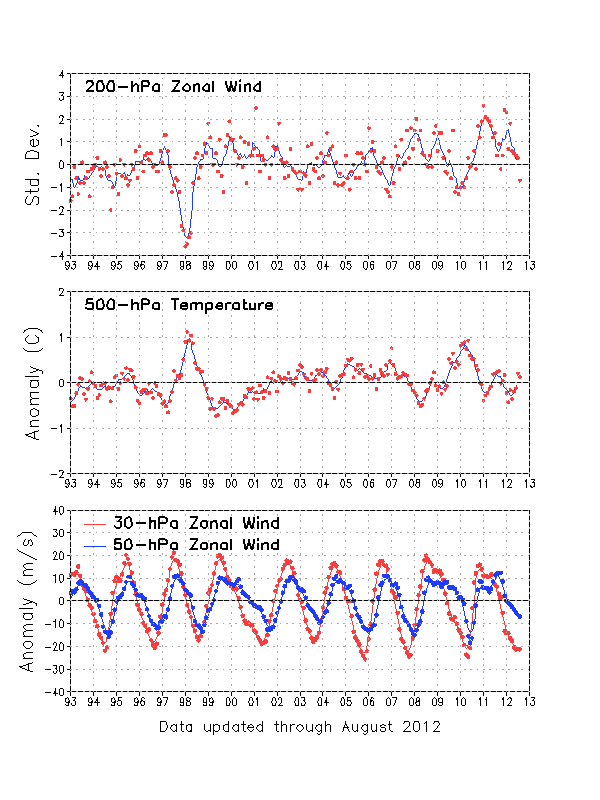
The QBO essentially measures the wind anomaly in the stratosphere over the equator.  This affects us because a positive or westerly QBO tends to be more hostile towards blocking, while a negative or easterly QBO tends to be more favorable for sudden stratospheric warming events and high latitude blocking during the winter months.

The correlation for a +QBO in the winter months (1949-2011) shows that in general, when the QBO is in its positive, or westerly phase, that lower than normal heights tend to persist over the high latitudes, meaning the high-latitude blocking is generally less likely during a +/westerly QBO than a -/easterly QBO.

As can be seen two images up, the zonal wind anomalies at 30mb and 50mb were positive going into last winter but have since slackened and become negative.  The March-September 2012 period featured a good amount of high latitude blocking, possibly as a result:

Given the zonal wind anomalies continue to be strongly easterly, with down-welling evident as the 200mb zonal wind anomalies begin to decrease, along with the tropical 500mb temperatures increasing, it is a fairly good bet that winter 2012-13 will feature a –QBO…possibly strongly…which may favor high latitude blocking.

Summer-time blocking:

The NAO has been prevalently negative since May 2012. In fact, every month has featured an average NAO of -.59 or lower since May. Since 1950, there have only been 6 instances since 1950 in which at least 4 of the 5 months from May-September have featured an NAO of -.50 or lower, per this data available on the CPC website:

http://www.cpc.ncep.noaa.gov/products/precip/CWlink/pna/norm.nao.monthly.b5001.current.ascii.table

Of those 6 instances, 4 of the 6 following meteorological winters featured an NAO that averaged less than “0”:

1957-58: .12/-.54/-1.06/avg -.49

1968-69: -1.4/-.83/-1.55/avg -1.26

1993-94: 1.56/1.04/0.46/avg +1.02

1998-99: 0.87/0.77/0.29/avg +0.64

2008-09: -0.28/-.01/0.06/avg -.08

2010-11: -1.85/-0.88/0.7/avg -.68

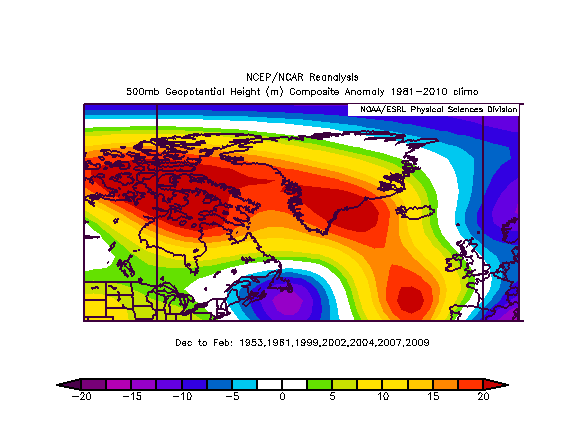
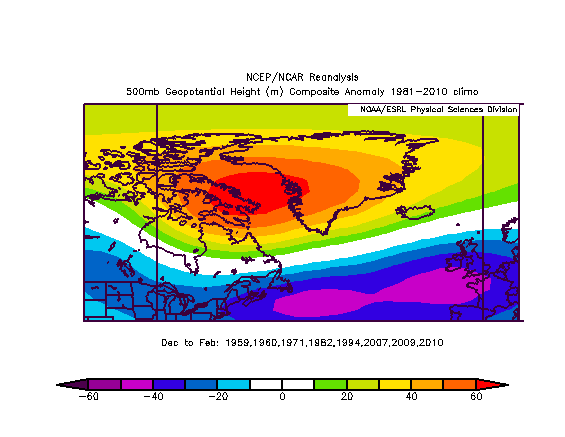
The 500mb height anomalies over the NAO region the following winters, on average, looked like this:

So, although the sample size isn’t extremely large, years that featured an overwhelmingly negative NAO from May-September were twice as likely to see a negative NAO DJF period than a positive NAO DJF period. So, this slightly favors high latitude blocking this winter. In two of the four negative NAO years in this set of “analogs,” the NAO trended from strongly negative early towards more of a neutral NAO. In the other two years, as can be seen above, the trend was the other way around.

Atlantic Sea Surface Temperatures:

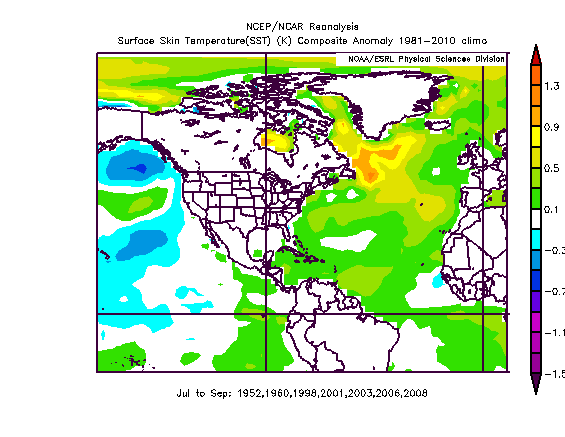
Since 1950, there have been 14 winters which have seen an average NAO of less than -0.50. The Atlantic sea surface temperatures in the July-September period leading up to those winters looked like this:

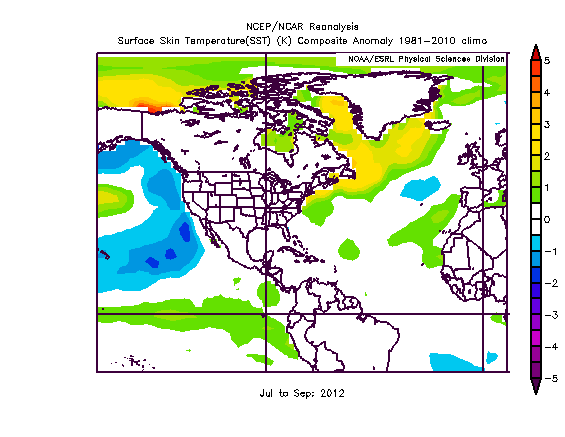
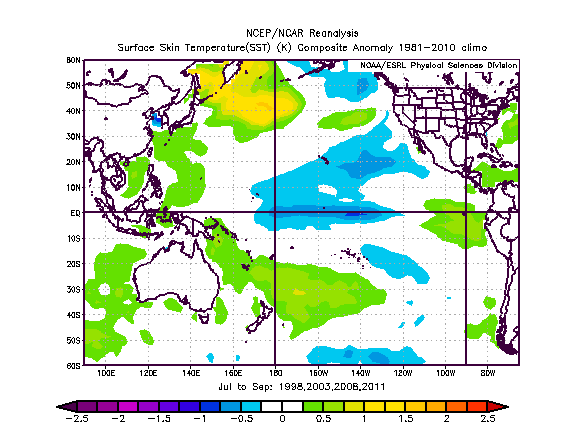
The water temperature this July to September looked like this:

There are very few correlations in the Atlantic Ocean between JAS periods leading up to –NAO winters and the 2012 JAS period…although there are some similarities in the NE Pacific. This year, much of the northern Atlantic Ocean saw normal to above normal sea surface temperatures, with well above normal water temperatures surrounding and south of Greenland. In the JAS periods leading up to –NAO winters, the water across the north Atlantic was typically cooler than normal, with another tongue of cooler than normal waters along the equator. This variable does not support a –NAO winter this year.

When examining years in which the JAS Atlantic SSTs somewhat matched this year’s Atlantic JAS SSTs (whose composite JAS SSTs looked like this):

The following winter NAO looked something like this:

This is a –NAO look although the sample size is somewhat small, and the composite anomalies are not extremely strong (20m on the high end). The composite Pacific SSTs in these winters did feature a cold PDO, however the composite also shows a neutral-cool ENSO. Thus, this variable, when all is combined, does not strongly favor a predominant negative or positive NAO winter. The above Atlantic SST analogs featured the strongest blocking in January, with west based blocking in February, for what it’s worth.

Tropical Forcing:

In the same years used in the Atlantic Sea Surface Temperature section above for –NAO years here is what the precipitation rate looked like in the JAS period leading up to the above used –NAO years. Note the large area of above normal precip along the equator just east of the dateline:

This year’s map does not quite look like the above map. There was above normal precip east of the dateline along the equator, but not as much as in the JAS periods leading up to previous strongly –NAO winters. There was also above normal precip west of the dateline, which did not occur in the previously strong –NAO winters. There was an area of below normal precip stretching from the Central American coastline east towards Hawaii, which also occurred in the JAS periods leading up to –NAO winters. Overall, this variable does not conclusively point to a negative or positive NAO winter this winter.

When delving deeper, and looking at previous JAS periods that had similar tropical precipitation anomalies (that look like this):

The following winter high latitude blocking looked like this:

Which is a solid west based –NAO, overall. These winters, when averaged out, featured a neutral to maybe cool PDO in the Pacific and a neutral but on average slightly warm ENSO. These analogs may have some merit this winter, and support at least some high latitude blocking. These analogs also had warm water temps around Greenland in the JAS period, which lends some credence to this idea. In these “analog” years, the composite NAO was negative all three winter months, but trended from near neutral to strongly negative from December to February.

Solar Forcing

There is some suspicion that decreased (or at least a change in) sunspot activity may correlate to an increase in winter time sudden stratospheric warming events/high latitude blocking. Although my current breadth of knowledge doesn’t include how this forcing mechanism may work, I’m going to explore the issue a little bit right now.

We are nearing the peak of solar cycle 24. This cycle, thus far, has been extremely tame compared to cycle 23 which peaked near 2000 with sunspot numbers between 150 and 175. This cycle peaked at near 100 for a brief period of time in late 2011 before diminishing again. Based upon trends since the beginning of 2012, it is reasonable to expect a peak of somewhere around 75 at some point in 2013, and it seems to be a safe bet that winter 2012-2013 will feature sunspot numbers, at least monthly, of between 50 and 75.

While looking through sunspot data since 1949, I found 5 years that featured sunspot numbers general hovering between 50-75 in the months leading up to winter that remained in that area through winter. The composite 500mb height anomalies over the high latitudes looked like this:

Sunspot date found here:

http://solarscience.msfc.nasa.gov/greenwch/spot_num.txt

While not a strong anomaly, the AO and NAO appear to be slightly positive, on average, during winters with similar sunspot activity to what I am expecting this winter. This is a small sample size and not a strong signal, which again makes it hard to make a definitive call based on this variable to this winters NAO. It should also be noted that in the solar forcing “analogs,” the NAO trended from positive on average in December to neutral in January to negative in February.

All in all, through some mixed signals, there are more signs of a negative NAO winter overall than a positive NAO one; however the signals aren’t extremely strong. This may be a winter that sees alternating periods of blocking and no blocking, with blocking probably being somewhat more likely after December.

July-September Pattern Analogs:

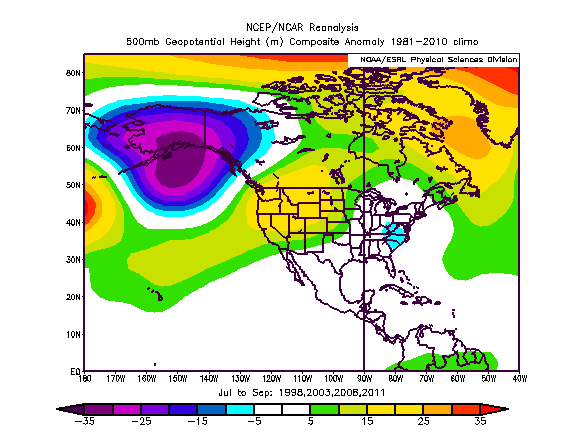
Above is a look at the JAS 2012 pattern across North America. Some key features to point out are strong Greenland blocking leading to a trough over the eastern US, along with lower than normal heights between Alaska and Siberia leading to ridging over western North America.

When looking through reanalysis data from 1948 onward, it was evidently rare to have ridging over western Alaska during summer with a –NAO over the North Atlantic. There are only 4 years where the JAS composite 500mb height anomaly maps were satisfyingly close to this year’s prevailing 500mb pattern for the JAS period…here is the mean 500mb height anomaly in these “analogs”:

Not a perfect match by any stretch…however, it seems unusual to see good high-latitude blocking over Greenland and a strong low 500mb height anomaly near Alaska…resulting in a trough in the eastern US…in the JAS period. The winters following these summers played out as follows:

December composite:

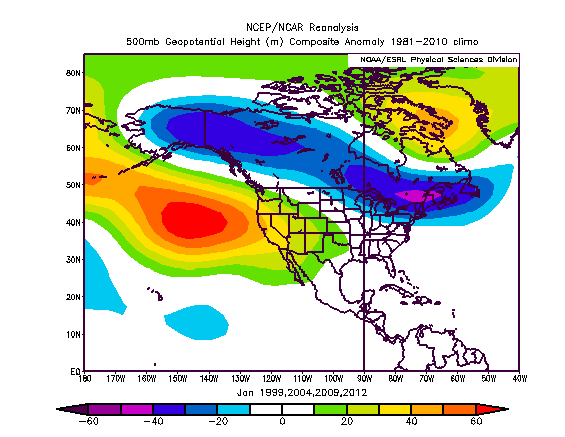
January Composite:

February Composite:

In general, the analogs, based strictly on the proceeding JAS period indicate that high latitude blocking is more likely in January than February in the roll forward analog years…there is also some ridging off the west coast of the US in each month of the analog years. However, the sample size is extremely small, and the Pacific in general this year does not match the JAS “analogs”…here was the JAS Pacific SSTs those years:

Thus, these analogs will not be given much weight in this forecast.

Putting it all together:

In general, I have found that:

-Based on my methods used, a variable NAO appears to be likely this winter, with periods of negative and positive NAOs likely. When these periods occur is in question, although I’d favor a more negative NAO overall as the winter progresses.

-Based on my Pacific analogs, a dominant polar jet appears more possible than a dominant subtropical jet. However, a warm-neutral ENSO supports a more lively sub-tropical jet. This may result in quite a gradient setting up somewhere over the central US with a fair amount of precip near this gradient. This also means it may be necessary to throw standard “Nino climo” out the window.

-The general trend seems to be a trough in the western US due to ridging over the central Pacific and possibly into Alaska, with the pattern possibly shifting eastward through the winter. This is also supported by the NAO analogs showing a more negative NAO as the winter goes on in general, although not in every case. With a warm but only weakly so ENSO, the cold PDO may result in this winter behaving more like a La Nina than an El Nino, or potentially as some sort of hybrid of the two.

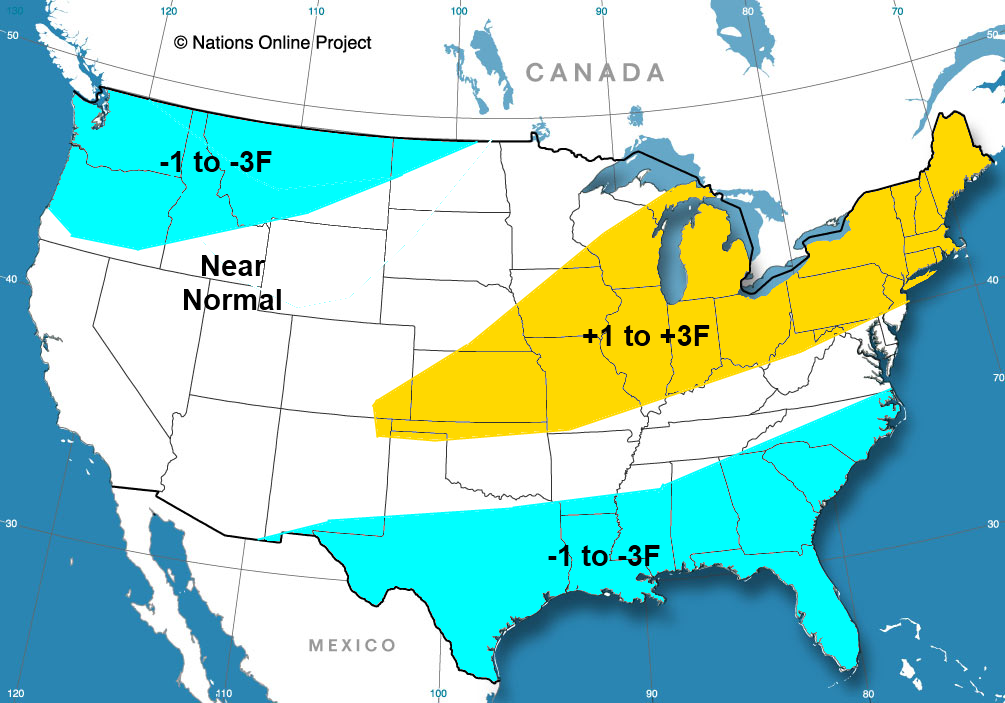
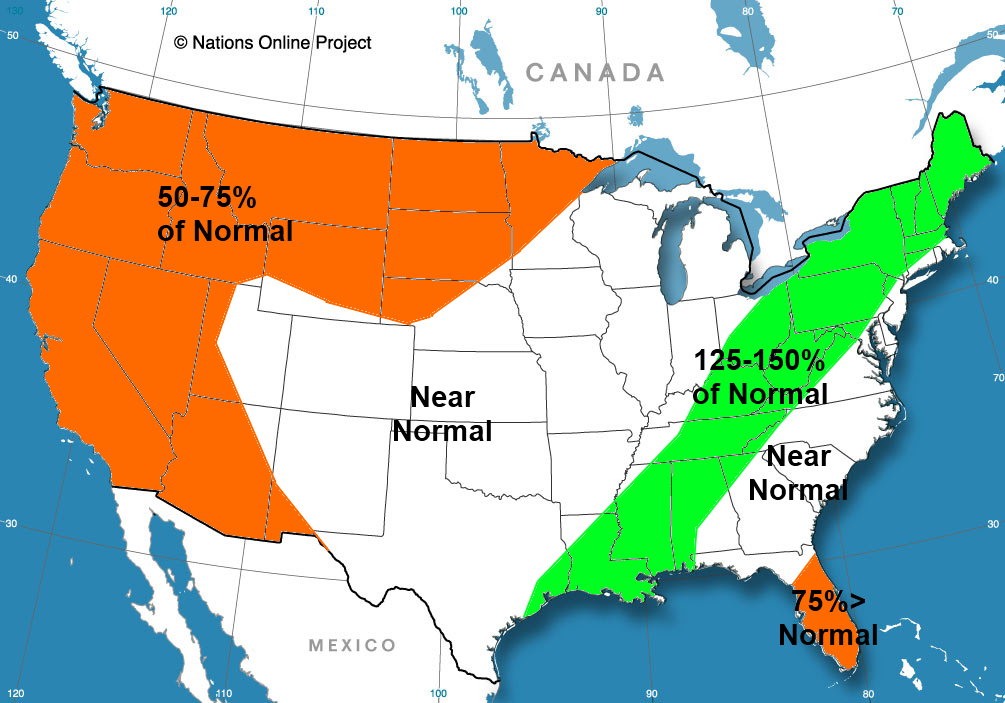
Based on this, here are my monthly maps:

December (temps then precip):

January (temps then precip)…

February (temps then precip):

“For fun” snowfall forecast (overall):

Posted in Pattern Discussion | 2 Comments

Stay Safe!

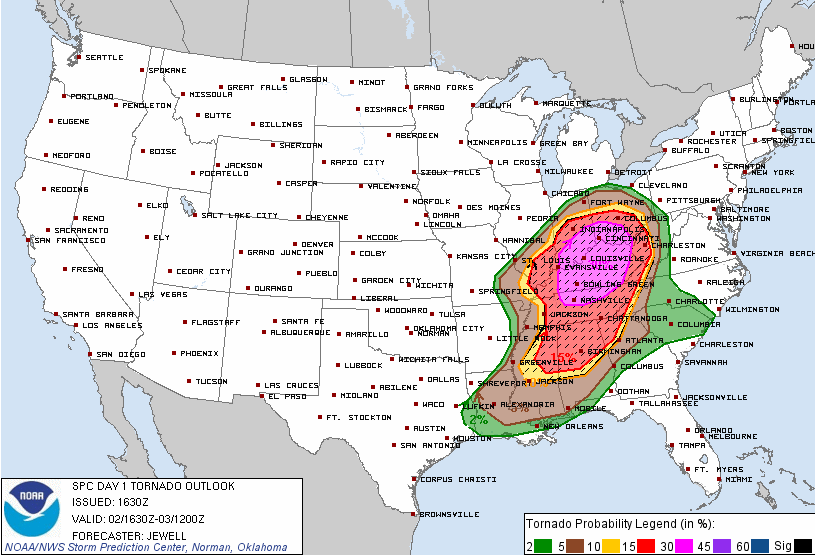
The Storm Prediction Center is expecting a moderate to high risk for tornadoes in many large metro areas today! Stay safe and take immediate action to protect your life if a tornado warning is issued for your area:

Posted in Storm Forecasts | Leave a comment

Severe Weather Outlook for Friday and Friday Night March 2, 2012

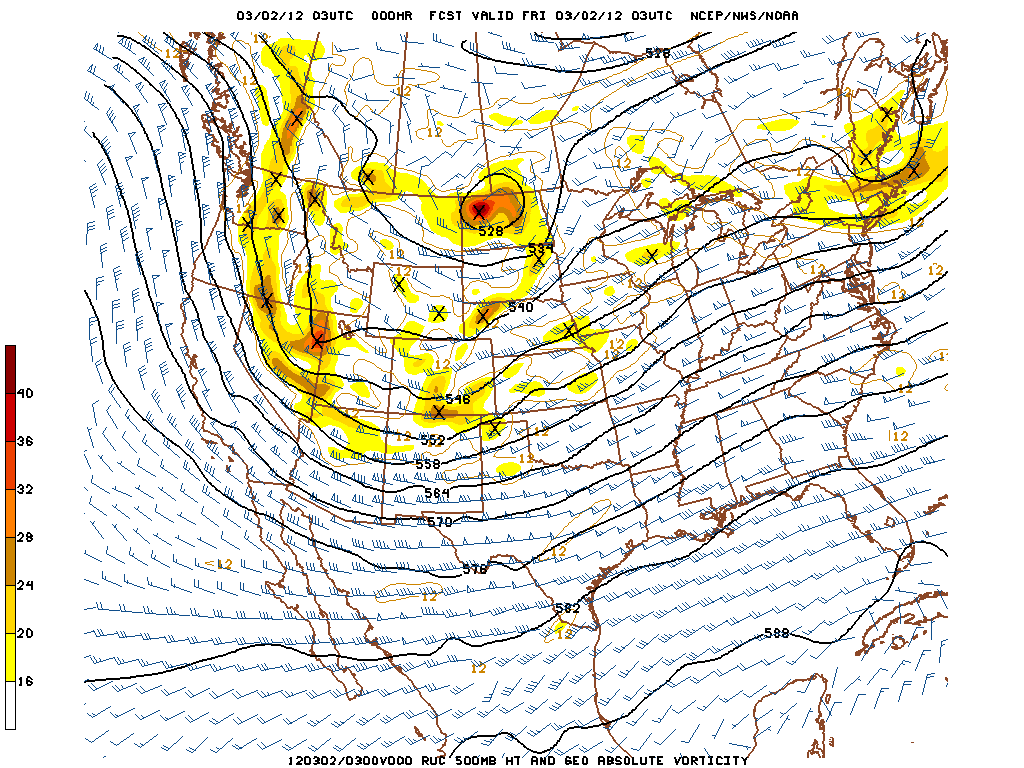
A large trough is currently beginning to eject out of the western US. As an associated jet streak continues to round the base of this trough and as phasing occurs with a polar branch closed low over the northern Plains, the trough will take on a negative tilt over the central US. This will allow for a surface low pressure to intensify quickly as it tracks northeastward towards the lower Great Lakes on Friday.

There is relatively good model agreement on a sub-990MB surface low tracking into southern-central lower Michigan by early Friday evening, with a warm front extending eastward across Lake Erie and western PA by sundown.

In the interim, elevated convection is expected to develop and expand by the start of the period as a low level jet intensifies in the warm sector of the developing low pressure early Friday morning. As this jet noses into the TN and eventually Ohio Valleys, these elevated storms will likely pose a marginal large hail threat early Friday morning. Note the strengthening low level jet depicted by the GFS for 12z Friday:
The strong low level jet combined with the aforementioned deepening low pressure system tracking towards the lower lakes will pull a warm front northward. Much of this elevated convection should remain north of the warm front and will continue to pose a marginal hail threat through much of the day into the upper OV and perhaps the lower Great Lakes. Elevated convection will also develop in the warm advection over the Deep South, which is expected to track east-northeastward through the day. Some of this activity may become surface based, mainly well south of the Ohio River.

As the low tracks farther northeast, the strong low level wind fields will advect 55 degree plus dewpoints north into central and perhaps northern IN and OH with dewpoints of up to 65 degrees potentially extending into the upper TN Valley. A punch of dry and warm mid level air (EML) will likely result in sunshine in the warm sector during peak heating, especially south of the Ohio River, resulting in surface temperatures quickly rising well into the 70’s by mid afternoon south of the River…this warm and moist airmass is expected to yield MLCAPEs of 1000-2000 J/KG from southern IL/IN/SW OH south through the TN Valley into the northern Gulf Coast states with values of up to 500 J/KG reaching northern IN/OH.

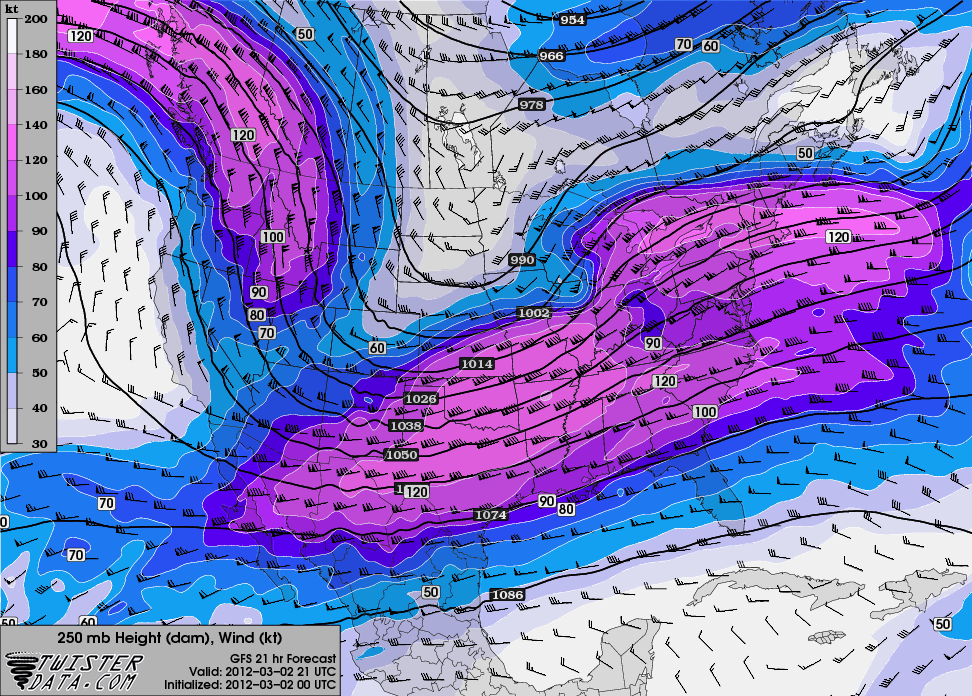
By mid afternoon a 100+kt 500mb jet streak will begin nosing over the warm sector from TN points north…and an outstanding dual upper level jet structure will exist in this same area with 120-140kt jet streaks providing outstanding large scale lift:

This large scale lift combined with a sharp cold front advancing eastward will result in new convection quickly developing in the warm sector by mid afternoon that will begin racing ENE-ward on very fast mid level winds. Elevated convection over the TN Valley and northern Gulf Coast States may also become rooted to the surface by this time.

Given backed surface winds in the warm sector due to the deepening sfc low/especially over the Ohio Valley/lower Lakes resulting in sfc-500mb wind crossovers approaching 90 degrees of change and bulk shear in excess of 60 kts over the majority of the warm sector and approaching 100 kts towards and north of the Ohio River and the relatively favorable thermodynamic environment/MLCAPE of 1000-2000 J/KG especially from the Ohio River points south in tandem with the aforementioned large scale lift convection will likely rapidly become severe once it begins to fire/or become surface based.

Given the strong shear with 0-1km helicity values of 200-300 over much of the warm sector rotating updrafts will be likely initially…supporting a tornado and large hail threat along with the threat for damaging strait line winds. Sfc-500mb shear vectors will be out of the W-WSW across a cold front aligned SSW-NNE, which favors discrete storms. As the sun goes down do expect organization into a squall line along/just ahead of the cold front with a widespread damaging wind threat and continued squall line tornado threat given strong low level shear.

Expect severe threat to gradually decrease with time overnight as action presses eastward towards the Appellation Mountains.

As for placement of highest severe threats…believe greatest risk will lie from far southeast IL…far southern IN…and far SW OH points south through much of western/central KY, western/central TN into northern MS/AL. Believe highest risk for severe will be east of the Mississippi as aforementioned EML will likely cap the warm sector into Friday afternoon and favorable portion of 500mb jet streak will not begin to move over the warm sector until approximately 18-21z…at which point front is expected to be east of the Mississippi. Shear will be a bit weaker over the TN Valley/northern Gulf Coast States but moderate instability and what is still favorable shear for supercells combined with a less interrupted moisture source should result in a notable severe threat into northern AL/MS by late afternoon. North of the Ohio River instability will be more limited but shear will be favorable with very large hodographs and the strongest bulk shear. Main concern is convection that will be ongoing over TN/AL/MS through much of Friday morning and early afternoon may create enough subsidence to limit severe potential somewhat. However, given expected MLCAPEs of 500-1000 J/KG into central IN/OH combined with favorable shear believe a conditional severe threat will exist into at least central IN/OH. The farther north one gets the more questionable moisture return/instability will get but given very dynamic kinematic environment believe a marginal risk for severe will exist into northern IN/OH by late afternoon

Will go with a moderate risk for tornadoes across the central and lower Ohio Valley into the TN Valley given good potential for supercells. Given very large hodographs and expected instability in these areas a few strong/long track tornadoes will be possible, however given some questions about capping and updraft intensity given decent EML to try to punch through will not go with high probabilities.

Will also go with a moderate risk for damaging winds in a similar corridor and also extend this risk area into the northern Gulf States as instability and shear will easily support bowing line segments with significant wind damage risk as convection transitions into a more linear mode by late evening.

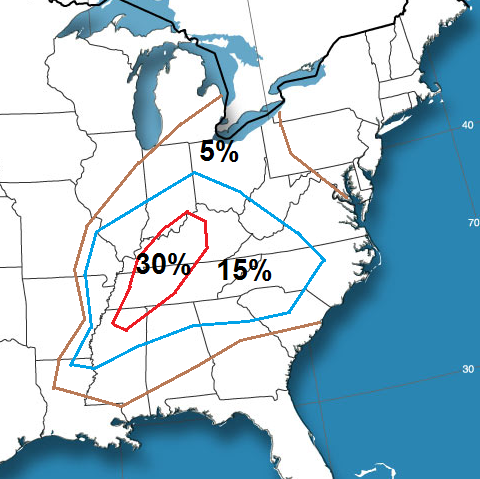
Severe weather probabilities…probabilities are SPC equivelents and represent the chance of a severe weather event occurring within 25 miles of any given point. For official forecasts…visit spc.noaa.gov and/or weather.gov …

Tornado probabilities…dotted = 10% or greater risk of F2-F5 tornado within 25 miles of any given point

Damaging wind probabilities…dotted = 15% or greater risk of 65+ kt gusts within 25 miles of any given point…

Hail probabilities…

Posted in Storm Forecasts | Leave a comment